
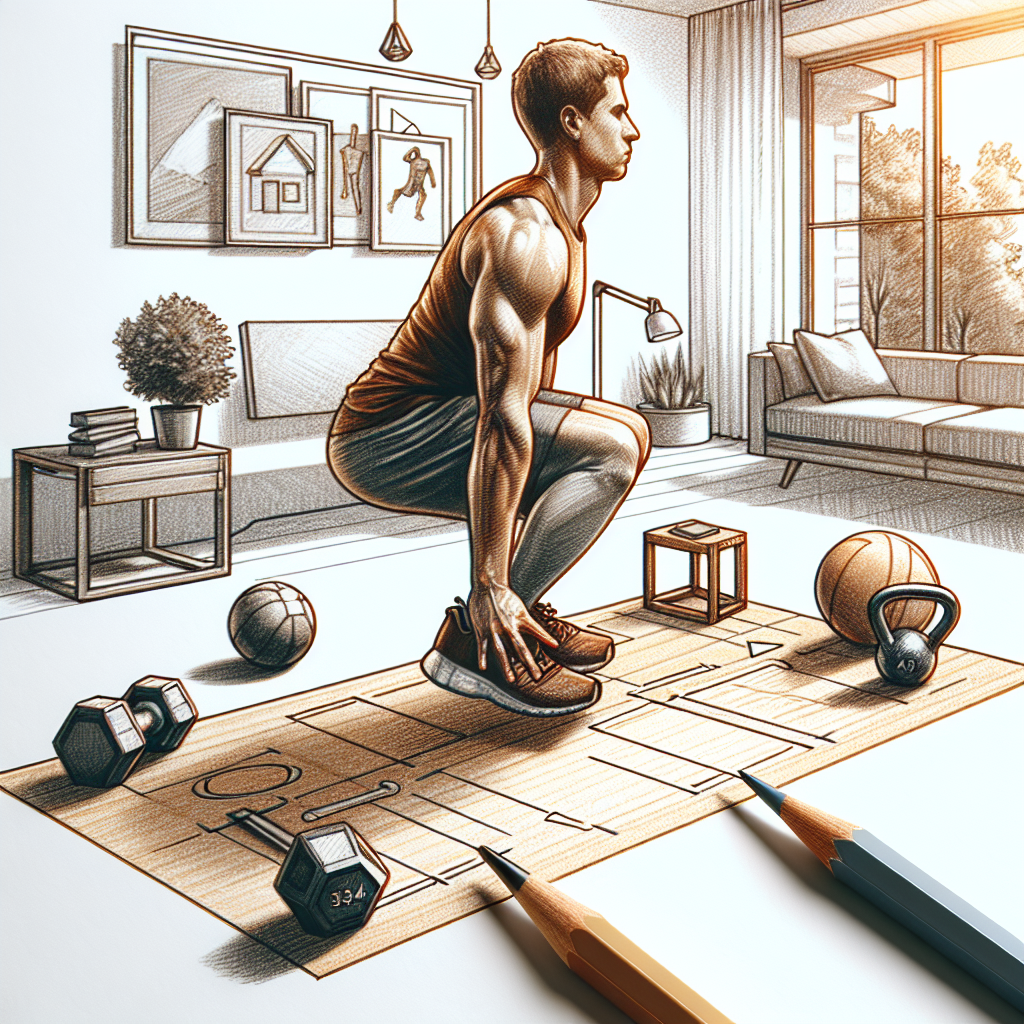
In today’s fast-paced world, finding time for fitness can be challenging, especially with the added inconvenience of traveling to a gym. However, effective workouts can be performed at home without any equipment, making fitness accessible to everyone. These exercises can improve strength, flexibility, and cardiovascular health, taking only a few minutes a day. This article will explore various home workouts that require no equipment, providing you with practical guidance to embark on your fitness journey.
- Understanding the Benefits of No-Equipment Workouts
- Essential Home Exercises
- Creating an Effective Workout Routine
- Myths and Misconceptions
- When to Seek Professional Guidance
- Frequently Asked Questions
- Conclusion
Understanding the Benefits of No-Equipment Workouts
Engaging in workouts that require no equipment offers numerous advantages. Firstly, they provide flexibility, enabling individuals to exercise anytime and anywhere. This can lead to a greater commitment to a consistent fitness routine. Additionally, such workouts can enhance functional strength, allowing for better performance in daily activities. Furthermore, they can be easily modified to meet various fitness levels, accommodating everyone from beginners to advanced practitioners.
Essential Home Exercises
Below are some foundational exercises that can be performed at home without any equipment.
1. Bodyweight Squats
Squats engage multiple muscle groups, including the quads, hamstrings, and glutes. Here’s how to perform them:
- Stand with feet shoulder-width apart.
- Lower your body as if sitting in a chair, keeping your back straight and knees behind your toes.
- Push through your heels to return to a standing position.
2. Push-Ups
This classic exercise targets the chest, shoulders, and triceps. Follow these steps:
- Begin in a plank position with hands slightly wider than shoulder-width.
- Lower your body until your chest nearly touches the floor.
- Push back up to the starting position.
3. Lunges
Lunges work the legs and improve balance. To perform lunges:
- Stand upright and take a large step forward with one leg.
- Lower your hips until both knees are bent at about a 90-degree angle.
- Push back to the starting position and switch legs.
4. Plank
Planks strengthen the core and improve stability. Here’s how to hold a plank:
- Lie face down and lift your body using your forearms and toes.
- Keep your body in a straight line from head to heels.
- Hold for 20-60 seconds, breathing steadily.
5. Mountain Climbers
This dynamic exercise raises the heart rate while working the core. Here’s how to do it:
- Begin in a push-up position.
- Quickly draw one knee toward your chest, then switch legs in a running motion.
- Continue alternating for 30 seconds to one minute.
Creating an Effective Workout Routine
A well-structured workout routine can maximize the benefits of home exercises. Here’s a simple guideline to follow:
- Warm-up: Spend 5-10 minutes on light aerobic activity (like jogging in place).
- Workout: Perform 2-3 sets of each exercise, aiming for 10-15 repetitions per set.
- Cool down: Spend 5 minutes stretching major muscle groups.
For those seeking a structured program, consider registering for a 30-day exercise program where you only need to spend six minutes daily, achieving results comparable to a traditional gym routine.
Myths and Misconceptions
As with any fitness topic, various myths may deter individuals from engaging in home workouts. Here are common misconceptions debunked:
Myth 1: No-Equipment Workouts Aren’t Effective
Contrary to this belief, bodyweight exercises can build strength, improve endurance, and burn fat effectively.
Myth 2: Home Workouts Are Too Easy
Workouts can be tailored to increase difficulty, ensuring continuous progression regardless of fitness level.
Myth 3: You Can’t Build Muscle at Home
While heavy weights contribute to muscle gains, bodyweight exercises, when done correctly, can also promote muscle growth effectively.
When to Seek Professional Guidance
While home workouts can be beneficial, certain signs may indicate the need for professional assistance:
- If you experience persistent pain or discomfort that affects your performance.
- If you’re unsure how to perform an exercise correctly, leading to concerns about injury.
- If you have pre-existing health conditions that may affect your ability to engage in physical activity.
Consulting a fitness professional can provide personalized guidance and help establish a safe and effective workout plan.
Frequently Asked Questions
1. Can I really get fit without any equipment?
Yes, bodyweight exercises can be incredibly effective for improving strength, flexibility, and cardiovascular health.
2. How often should I work out at home?
Aim for at least three to five times a week, incorporating a mix of strength and cardio exercises.
3. Are home workouts suitable for beginners?
Absolutely! Home workouts can be modified to suit all fitness levels, making them ideal for beginners.
4. How can I stay motivated to work out at home?
Set specific goals, track your progress, and consider joining an online community for support.
5. Is stretching important after a workout?
Yes, stretching helps prevent injury and aids in recovery by improving flexibility and circulation.
6. What if I don’t have time for long workouts?
Short, high-intensity workouts can be effective. Even six minutes a day can yield significant results.
Conclusion
- Home workouts require no equipment and offer flexibility for busy schedules.
- Essential bodyweight exercises can improve strength and cardiovascular health.
- Creating a structured routine maximizes the benefits of training.
- Understanding common myths can help you embrace bodyweight exercises.
- Consult a professional if experiencing pain or uncertainty in your workout.
Start integrating these home workouts into your daily routine, and do not hesitate to explore a structured program that fits your lifestyle. You can change your fitness journey for the better, one short, effective session at a time.
Author: John Angel