
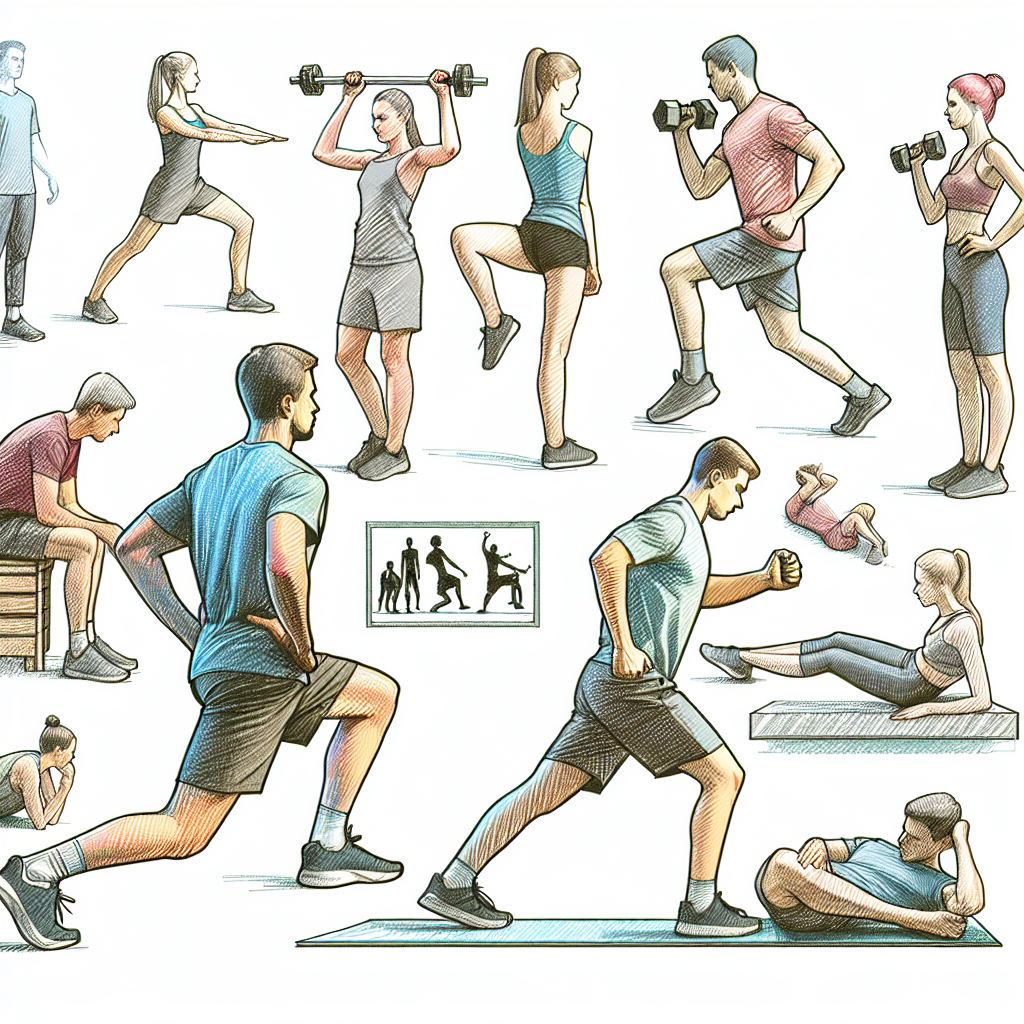
Bodyweight No Equipment Workout: Achieve Results with Minimal Time Investment
In a world increasingly defined by its busy schedules, finding effective workout solutions can seem daunting. Bodyweight workouts offer an excellent alternative, requiring no external equipment while enabling you to build strength, enhance endurance, and improve flexibility. This article explores the benefits, structure, and practical execution of bodyweight workouts, providing guidance for individuals eager to enhance their fitness levels without the constraints of traditional gym settings. You will also learn about a convenient approach to daily exercise, achieving gym-like results within just six minutes a day.
- Understanding Bodyweight Workouts
- Benefits of No Equipment Exercise
- How to Structure a Bodyweight Workout
- Effective Bodyweight Exercises
- Common Myths and Misconceptions
- When to Consult a Professional
- Frequently Asked Questions
- Conclusion
Understanding Bodyweight Workouts
Bodyweight workouts utilize your own body’s weight as resistance, eliminating the need for external equipment. This form of training leverages functional movements to build strength and endurance, allowing for a versatile approach that can be easily adapted to various fitness levels. Unlike traditional workouts that often require gym access, bodyweight exercises can be performed almost anywhere—be it at home, in a park, or during a quick break at work.
Benefits of No Equipment Exercise
The advantages of bodyweight workouts extend beyond convenience. Below are some key benefits:
- Flexibility: You can perform these exercises anytime and anywhere.
- Time Efficiency: High-intensity bodyweight workouts can provide effective training in a short amount of time.
- Improved Functionality: These exercises enhance balance, coordination, and functional strength.
- Progressive Adjustability: You can easily modify difficulty levels as your fitness improves.
- Cost-Effective: No gym membership or equipment purchase is required.
How to Structure a Bodyweight Workout
To maximize the effectiveness of your bodyweight workout, consider the following structure:
- Warm-Up (3-5 Minutes): Start with dynamic stretches to prepare your muscles.
- Workout Phase (15-30 Minutes): Perform a series of bodyweight exercises, focusing on different muscle groups.
- Cool Down (5 Minutes): Stretch your major muscle groups to aid recovery.
Effective Bodyweight Exercises
Incorporate these classic exercises into your routine for a balanced bodyweight workout:
- Push-Ups: Strengthen the chest, triceps, and shoulders.
- Squats: Focus on the quadriceps, hamstrings, and glutes.
- Lunges: Enhance balance and strengthen the lower body.
- Planks: Improve core strength and stability.
- Burpees: A full-body exercise that increases heart rate significantly.
For those seeking a convenient way to incorporate exercise into their daily routine, consider registering for a 30-day exercise program that allows you to achieve substantial results by exercising just six minutes a day.
Common Myths and Misconceptions
Despite the growing popularity of bodyweight workouts, several myths persist in the fitness community:
- Myth 1: You cannot build muscle without weights. Bodyweight exercises can effectively stimulate muscle hypertrophy when performed correctly.
- Myth 2: Bodyweight exercises are too easy for serious athletes. Advanced variations can challenge even the most experienced individuals.
- Myth 3: Bodyweight workouts lack variety. With numerous exercises and modifications, bodyweight training can be incredibly diverse.
When to Consult a Professional
While bodyweight exercises are generally safe for most individuals, certain conditions may necessitate professional guidance:
- If you have pre-existing injuries or medical conditions affecting your ability to exercise.
- If you experience pain that persists beyond normal muscle soreness.
- If you are uncertain about the correct form for specific exercises.
- If you have been sedentary for an extended period and wish to begin an exercise regimen.
Frequently Asked Questions
Can I really build muscle with bodyweight exercises?
Yes, bodyweight exercises can effectively build muscle; the key is to progressively increase the difficulty by altering angles, duration, or exercise variations.
How often should I perform bodyweight workouts?
Aim for at least three to four sessions per week, combined with rest days to allow muscles to recover.
Are bodyweight workouts suitable for beginners?
Absolutely. Bodyweight workouts can be easily modified to suit any fitness level, making them ideal for beginners.
What if I don’t have time for a long workout?
Short, high-intensity intervals can yield significant results. Even six minutes of focused exercise can be effective, especially when performed consistently.
Can I lose weight with bodyweight workouts?
Yes, combining bodyweight workouts with proper nutrition can create a calorie deficit necessary for weight loss.
Is it necessary to warm up before a bodyweight workout?
Yes, warming up prepares your muscles and joints for exercise, reducing the risk of injury.
Conclusion
- Bodyweight workouts offer flexibility and convenience, requiring no special equipment.
- They effectively enhance strength, endurance, and flexibility when structured properly.
- Common myths about bodyweight training can be misleading; they can be very effective for building muscle and improving fitness.
- Professional consultation may be necessary for individuals with specific health concerns.
- Short, consistent workouts can lead to meaningful results without the time commitment of traditional gym sessions.
For a convenient way to embark on your fitness journey, consider trying the 30-day exercise program that requires just six minutes of your time each day. Sign up for free here, and transform your fitness routine today!
Author: John Angel