
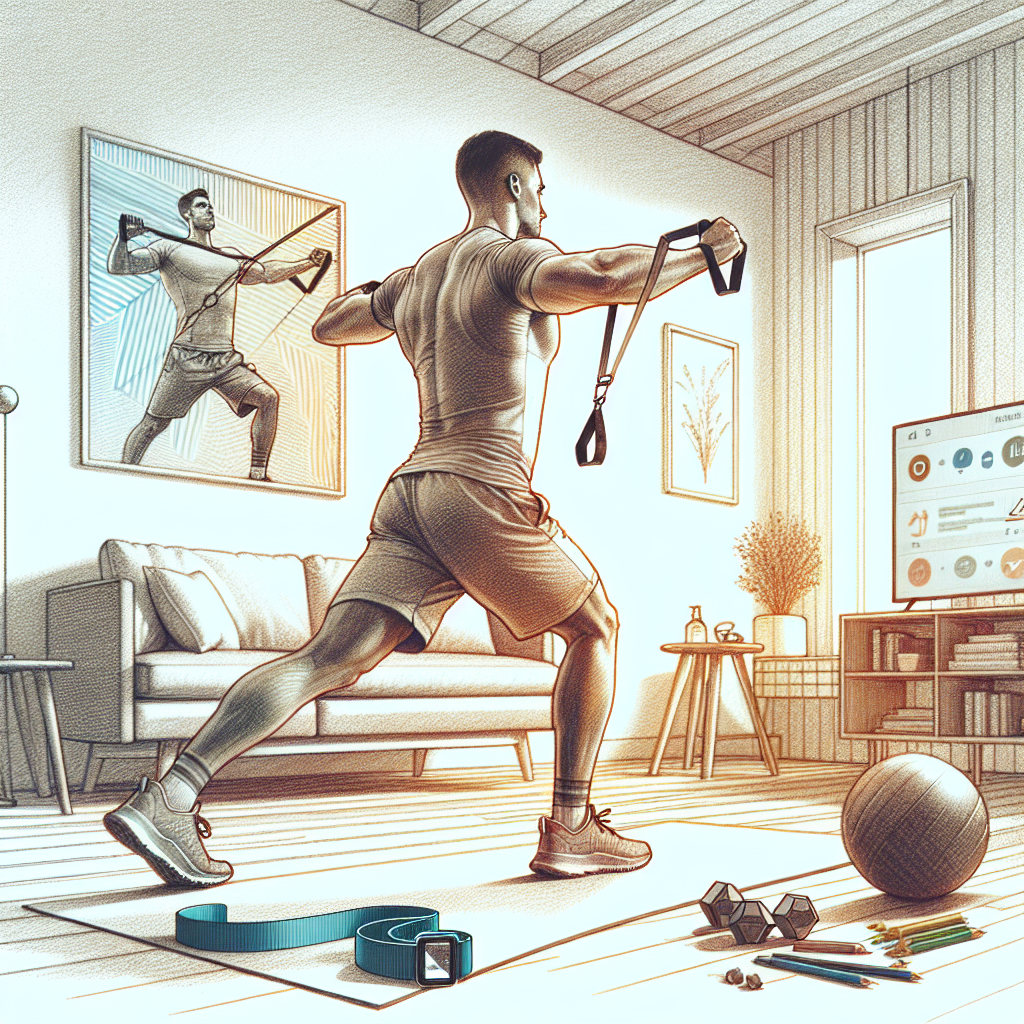
Home workouts have gained significant popularity, especially in today’s fast-paced world where many individuals seek efficient and effective means of maintaining fitness without the need for a gym membership. Engaging in exercise with minimal equipment not only saves time and resources but can also yield substantial results. In this article, we will explore how to optimize your home workout routine using minimal equipment while ensuring convenience and effectiveness.
- Introduction
- The Benefits of Minimal Equipment Workouts
- Essential Equipment for Home Workouts
- Effective Home Workout Routine
- Consulting a Professional: When to Seek Help
- Myths and Misconceptions about Home Workouts
- Frequently Asked Questions
- Conclusion
The Benefits of Minimal Equipment Workouts
Exercising at home with minimal equipment offers several advantages. First and foremost, it allows for flexibility in scheduling, as you can work out whenever it suits you. Additionally, minimizing equipment reduces financial overhead, thus making fitness accessible to everyone. Moreover, developing a personalized workout routine helps to enhance motivation as you take control of your fitness journey.
Essential Equipment for Home Workouts
If you are looking to establish an effective home workout routine, here are some fundamental pieces of equipment you might consider:
- Resistance Bands: These versatile bands can be used for various exercises to enhance strength.
- Dumbbells: A small set of dumbbells can add resistance for muscle training.
- Yoga Mat: Essential for comfort and stability, particularly during floor exercises.
- Jump Rope: An excellent tool for cardiovascular workouts and coordination.
Effective Home Workout Routine
When working with minimal equipment, it is crucial to design a balanced workout routine. Below is a concise structure that can be followed daily, taking as little as 6 minutes:
- Warm-Up (1 minute): Perform dynamic movements such as arm circles and leg swings to prepare the body.
- Push-Ups (1 minute): Engage in standard push-ups or modify them for your capability.
- Squats (1 minute): Utilize body weight or hold dumbbells for added resistance.
- Plank (1 minute): Focus on core stability by maintaining a plank position.
- Jump Rope (1 minute): Quickly elevate your heart rate with jump rope exercises.
- Cooldown (1 minute): Gradually reduce your heart rate with light stretching or deep breathing.
For more structured guidance, consider registering for a 30-day exercise program that requires only 6 minutes of daily effort, promising results comparable to traditional gym workouts.
Consulting a Professional: When to Seek Help
While home workouts can be beneficial for many, there are circumstances where consulting with a qualified fitness professional is advisable. Consider reaching out for advice if:
- You have pre-existing health conditions.
- You are unsure of the correct form for exercises.
- You experience pain or discomfort during workouts.
- You have specific fitness goals that require tailored guidance.
Myths and Misconceptions about Home Workouts
Understanding the truths behind common misconceptions related to home workouts can help you make informed decisions about your fitness journey:
- Myth 1: Home workouts are less effective than gym workouts.
- Myth 2: You need extensive equipment to see results.
- Myth 3: Home workouts lack variety.
- Myth 4: You cannot build muscle at home.
Frequently Asked Questions
Can I achieve my fitness goals at home without equipment?
Absolutely. Many bodyweight exercises can help build strength and endurance effectively.
How do I stay motivated while working out at home?
Set specific goals, track your progress, and vary your workouts to maintain interest.
How often should I work out at home?
Aim for at least three to five times per week, depending on your fitness level and goals.
Are there specific workouts for beginners?
Yes, starting with basic bodyweight exercises and gradually increasing intensity is recommended.
What should I do if I experience pain during exercise?
Stop the exercise immediately, assess the pain, and consult a healthcare professional if needed.
Can I work out at home if I have limited space?
Yes, many effective workouts require minimal space and equipment, focusing on bodyweight or resistance band exercises.
Conclusion
- Establish a flexible and effective home workout routine.
- Minimal equipment can yield significant results.
- Consult a professional if any concerns arise during your fitness journey.
- Be aware of myths surrounding home workouts to enhance motivation.
- Consider a structured program for maximized results with minimal time commitment.
Incorporating regular exercise into your life does not have to be complex or expensive. With the right mindset and minimal equipment, you can achieve your fitness goals efficiently. Explore the opportunity to register for a 30-day exercise program that requires just 6 minutes of dedication each day. Empower your fitness journey today!
Author: John Angel