
Categories
Fitness

Effective Back Workouts Without Equipment for Home Fitness

In today’s fast-paced world, maintaining a healthy lifestyle often feels like a luxury that many can’t afford, particularly when it comes to finding time for the gym. However, you can achieve significant fitness results without any equipment through back workouts tailored to your needs. This article will guide you through effective strategies and routines that focus on strengthening and conditioning your back muscles, enhancing your overall fitness without the need for a gym or expensive gear.

  • Understanding the Importance of Back Workouts
  • Effective Back Workouts Without Equipment
  • Step-by-Step Guide to Your Routine
  • Consulting a Professional: When to Seek Help
  • Debunking Common Myths About Back Workouts
  • FAQs: Your Questions Answered
  • Conclusion

Understanding the Importance of Back Workouts

The back is a crucial muscle group that supports your entire body. Strong back muscles contribute to overall posture, balance, and spinal alignment. They play a key role in stability, which is essential for daily activities and other exercises. Neglecting back workouts can lead to muscle imbalances and increase the risk of injury, making it vital to implement a routine that strengthens this crucial area.

Effective Back Workouts Without Equipment

Working out your back without any equipment is entirely possible, and there are various exercises you can integrate into your routine. These exercises focus on different areas of the back, ensuring a comprehensive strength-building session. Below are some effective workouts:

  • Superman Exercise: Lie face down and lift your arms and legs off the ground simultaneously, creating a ‘flying’ position. Hold for a few seconds before releasing.
  • Bird Dog: On all fours, stretch one arm forward while extending the opposite leg back. This exercise enhances core stability while targeting the back.
  • Plank Rows: While in a plank position, alternate lifting each arm to a rowing position, engaging the back muscles throughout.
  • Reverse Snow Angels: Staying on your stomach, lift your arms and legs slightly off the ground while moving your arms in a ‘snow angel’ motion.
  • Mountain Climbers: This dynamic movement engages various core muscles, including the back, while being a great cardiovascular workout.

Step-by-Step Guide to Your Routine

To build an effective back workout regimen, consider following these steps:

  1. **Warm Up:** Start with 5 minutes of dynamic stretches focusing on the upper body.
  2. **Choose Your Exercises:** Select 3-5 exercises from the list above.
  3. **Set Repetitions:** Aim for 10-15 repetitions for each exercise, performing 2-3 sets.
  4. **Rest Between Sets:** Allow for 30-60 seconds of rest between sets to facilitate recovery.
  5. **Cool Down:** Conclude with 5-10 minutes of static stretching, concentrating on your back muscles.

To further maximize your results, consider participating in a specially designed exercise program that incorporates short workouts you can perform at home. For a free registration to a 30-day exercise program lasting just 6 minutes a day, with results comparable to gym workouts, visit this link.

Consulting a Professional: When to Seek Help

While back workouts are generally safe, there are scenarios where consulting a healthcare professional is advisable. Consider seeking guidance if you experience:

  • Persistent back pain that does not improve with rest or home care.
  • Sudden weight loss or other unusual symptoms accompanied by back issues.
  • Limitations in movement or flexibility affecting daily activities.
  • Past injuries or existing health concerns that may complicate your exercise regimen.

Debunking Common Myths About Back Workouts

Despite common beliefs, there are several misconceptions surrounding back exercises. Acknowledging these myths can help in adopting a smarter fitness approach:

  • Myth 1: You need gym equipment to strengthen your back. Fact: Bodyweight exercises can be just as effective.
  • Myth 2: Back workouts only target the lower back. Fact: Comprehensive routines engage upper and middle back muscles as well.
  • Myth 3: Extending your back is the only way to strengthen it. Fact: Various movements, including rotations and stabilization, are also crucial.
  • Myth 4: More repetitions mean better results. Fact: Quality over quantity matters — focus on proper form.

FAQs: Your Questions Answered

1. How often should I do back workouts?

It is generally recommended to incorporate back workouts 2-3 times a week, allowing rest days in between for muscle recovery.

2. Can I do back workouts if I have back pain?

Consult a healthcare professional before undertaking any new workout regimen, especially if back pain is a concern.

3. Do bodyweight exercises for the back really work?

Yes, bodyweight exercises can effectively strengthen and tone your back muscles when performed correctly.

4. How long will it take to see results?

While individual results may vary, consistency over a 4-6 week period typically leads to noticeable improvements.

5. Can I do these exercises at home?

Yes, all the recommended exercises are suitable for home workouts and require no special equipment.

6. Are there any specific stretches for the back?

Yes, stretches like the cat-cow pose, child’s pose, and seated forward bend are excellent for back flexibility and relaxation.

Conclusion

  • Strengthening your back is essential for overall well-being and injury prevention.
  • You can effectively train your back without any equipment using bodyweight exercises.
  • Implementing a structured workout routine maximizes results and ensures proper muscle engagement.
  • Consult a professional if you experience persistent back issues or significant pain.
  • Debunking common myths helps create a more effective and enjoyable workout experience.

Incorporating back workouts into your fitness regimen offers countless benefits and enhances your quality of life. Begin your journey today with our comprehensive 30-day exercise program and see how just six minutes of daily effort can reap significant rewards in your fitness journey. For a free registration, visit this link.

Author: John Angel
Related articles

Categories
Fitness

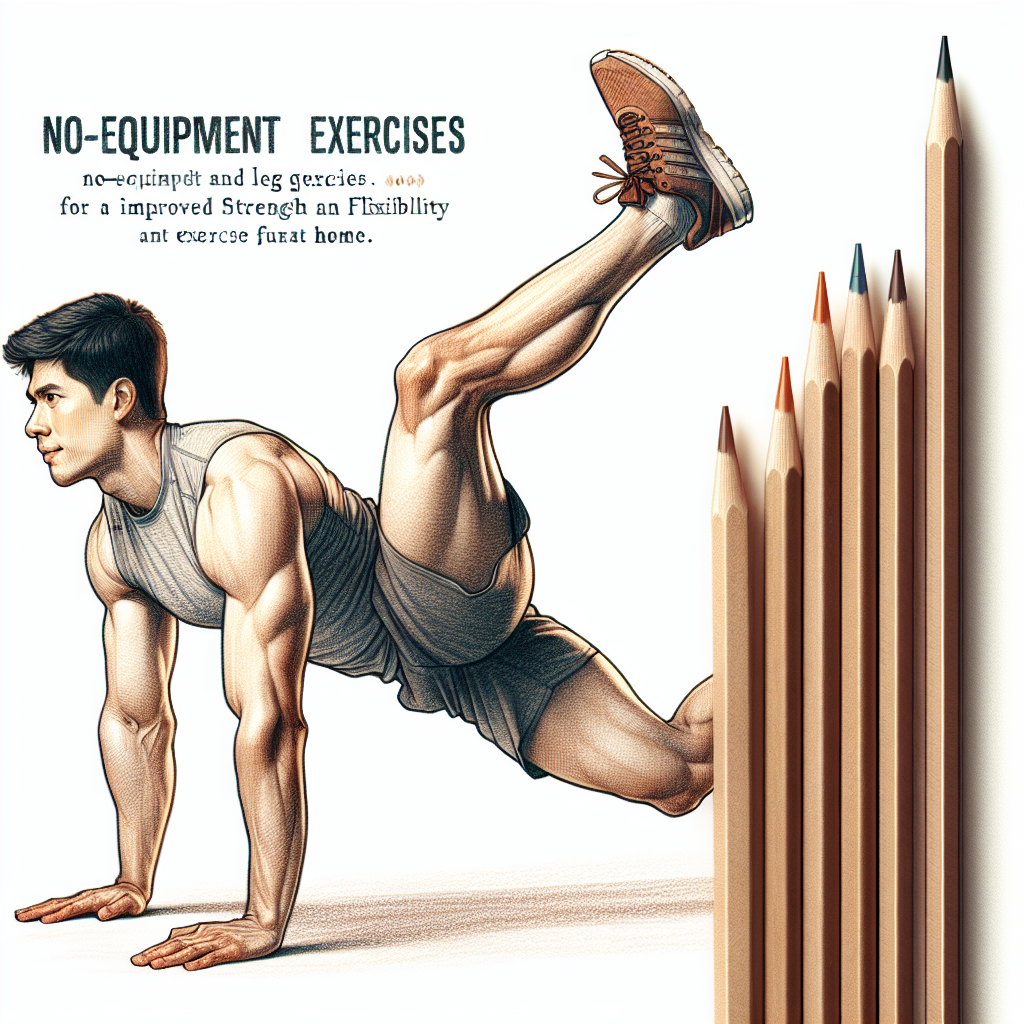
No-Equipment Leg Exercises for Strength and Flexibility

Leg Exercises Without Equipment: Strengthening Your Foundation

In today’s fast-paced world, finding time to exercise can pose a challenge, particularly when access to equipment is limited. However, leg exercises that require no equipment can effectively support muscle strength, flexibility, and overall fitness. By utilizing your body weight and gravity, you can develop stronger legs at home or in any environment. This article will guide you through a variety of effective leg exercises, highlight the benefits of each, and provide essential tips for maintaining proper form.

  • Introduction
  • Benefits of Leg Exercises
  • Effective No-Equipment Leg Exercises
  • Practical Steps to Implement
  • Consulting a Professional: When to Seek Help
  • Myths and Misconceptions About Leg Workouts
  • Frequently Asked Questions
  • Conclusion

Benefits of Leg Exercises

The legs comprise some of the largest muscle groups in the body, including the quadriceps, hamstrings, glutes, and calves. Engaging in leg exercises offers a multitude of benefits, including:

  • Improved Strength: Enhancing leg strength supports better performance in various activities, from walking to running.
  • Increased Stability: Strong legs contribute to overall body stability, reducing the risk of falls and injuries.
  • Enhanced Flexibility: Stretching and strengthening the legs promotes better flexibility and range of motion.
  • Caloric Burn: Leg workouts can elevate your heart rate and contribute to weight management and fat loss.
  • Convenience: No equipment is necessary, making these exercises accessible anywhere, anytime.

Effective No-Equipment Leg Exercises

This section elaborates on a selection of leg exercises you can perform without any equipment. Each exercise targets various muscles within the legs.

1. Squats

Squats are fundamental exercises that engage the quadriceps, hamstrings, and glutes.

2. Lunges

Lunges are excellent for targeting the glutes, hamstrings, and quadriceps, while also improving balance.

3. Calf Raises

Calf raises focus on the calf muscles, promoting strength in the lower legs.

4. Glute Bridges

This exercise primarily engages the glutes and can improve hip flexibility and strength.

5. Step-Ups

Step-ups can be performed on any stable surface, working the quadriceps and glutes.

Practical Steps to Implement

To maximize the effectiveness of your leg workouts, consider following this structured approach:

  1. Warm-Up: Spend 5-10 minutes warming up with dynamic stretches or light cardio to prepare your muscles.
  2. Exercise Routine: Perform each exercise for 3 sets of 10-20 repetitions, depending on your fitness level. Take a 30-second rest between sets.
  3. Cool Down: Conclude your workout with static stretches focusing on the quadriceps, hamstrings, calves, and glutes to promote recovery.
  4. For a comprehensive program that requires just 6 minutes per day, consider registering for a free 30-day exercise program here.

Consulting a Professional: When to Seek Help

While exercising is beneficial, certain signs warrant professional consultation. Seek help from a qualified fitness trainer or healthcare professional if you experience:

  • Persistent pain during exercise.
  • Dizziness or extreme fatigue.
  • Swelling or discomfort in your legs.
  • Difficulty performing daily activities.

Myths and Misconceptions About Leg Workouts

Several misconceptions surround leg exercises that can deter individuals from engaging effectively. Here are a few common myths:

  • Myth 1: Leg workouts lead to bulky legs. Truth: Strength training, combined with appropriate nutrition, can create toned rather than bulky muscles.
  • Myth 2: Only gym workouts are effective for the legs. Truth: Bodyweight exercises can be equally effective in building strength and endurance.
  • Myth 3: You should feel pain to see results. Truth: Discomfort can signal poor form or overexertion; focus on proper technique instead.

Frequently Asked Questions

What are some quick leg workouts that require no equipment?

Squats, lunges, calf raises, glute bridges, and step-ups are ideal for quick, effective leg workouts without equipment.

How often should I do leg exercises?

For best results, aim to perform leg workouts 2-3 times per week, allowing at least a day of rest between sessions.

Can I lose weight by performing leg exercises at home?

Yes, bodyweight leg exercises can support weight loss, especially when combined with a balanced diet and regular exercise.

What if I don’t feel any muscle fatigue during leg workouts?

Consider increasing repetitions, maintaining proper form, or adding variations to your exercises to effectively challenge your muscles.

Are leg exercises suitable for beginners?

Absolutely. Many leg exercises can be modified for all skill levels, allowing beginners to start safely and progressively increase intensity.

How can I improve my form during leg exercises?

Focus on maintaining proper posture, engaging your core, and moving through your full range of motion. Observing yourself in a mirror or asking for feedback can also help.

Conclusion

  • Leg exercises without equipment are accessible and effective for all fitness levels.
  • Strengthening the legs supports enhanced stability, flexibility, and overall fitness.
  • Establishing a structured routine maximizes the benefits achieved through bodyweight exercises.
  • Consulting a professional is advisable if persistent pain or discomfort arises during workouts.
  • Addressing myths surrounding leg workouts encourages a more informed approach to fitness.

Embark on your leg workout journey today. Explore a 30-day exercise program requiring just 6 minutes each day to build strength and endurance effectively. Start your journey here!

Author: John Angel

Related articles

Website analytics information

We use Google Analytics 4 for visitor statistics. Analytics cookies require your consent, which you can change using the button above. The data controller is ZDRAVÍ S ÚSMĚVEM s.r.o., company ID 29283329, contact podpora@revolucnicviceni.cz. Google processes browser, device and page visit information. We do not send form field values to Analytics. How Google uses information · Google Privacy Policy.