Categories
Fitness

Effective Full Body Muscle Building Workout at Home

Building muscle doesn’t have to require a gym or expensive equipment. A full-body muscle-building workout at home can be both effective and efficient, helping you achieve significant gains in strength and muscle tone. This article explores effective bodyweight exercises, structured routines, and practical tips to help you create an impactful workout plan tailored to your needs.

  • Understanding Bodyweight Exercises
  • Effective Full-Body Workout Routine
  • Tips for Maximizing Results
  • When to Consult a Professional
  • Common Myths and Misconceptions
  • FAQ
  • Conclusion

Understanding Bodyweight Exercises

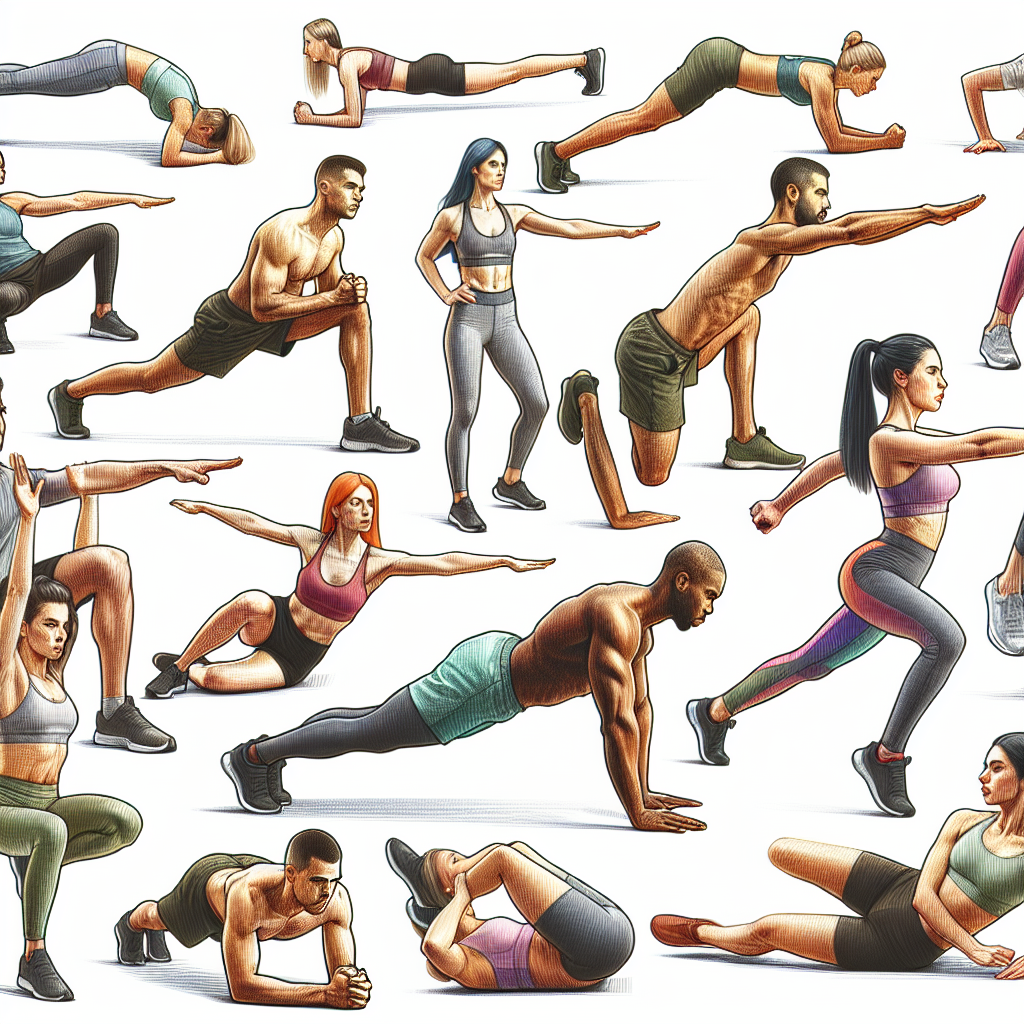
Bodyweight exercises utilize your own weight as resistance, making them an excellent way to build strength, improve flexibility, and enhance overall fitness. These exercises can be performed anywhere—at home, in a park, or even in a small apartment—making them highly accessible for everyone.

Effective Full-Body Workout Routine

Here’s a comprehensive full-body workout that combines several bodyweight exercises to target all major muscle groups:

  1. Push-Ups: 3 sets of 10-15 reps
  2. Squats: 3 sets of 15-20 reps
  3. Plank: 3 sets of 30-60 seconds
  4. Lunges: 3 sets of 10-12 reps per leg
  5. Burpees: 3 sets of 8-10 reps
  6. Mountain Climbers: 3 sets of 15-20 reps per leg
  7. Glute Bridges: 3 sets of 12-15 reps

Each exercise targets specific muscle groups, contributing to overall strength. Focus on form over speed, ensuring you are performing each movement correctly to reduce the risk of injury.

Tips for Maximizing Results

To get the most out of your home workout routine, consider the following tips:

  • Consistency: Stick to a regular schedule, aiming for at least 3-4 workouts per week.
  • Progression: Increase the intensity gradually by adding more reps, sets, or advancing to more challenging variations of the exercises.
  • Nutrition: Pair your workout routine with a balanced diet rich in protein to support muscle recovery and growth.
  • Hydration: Stay hydrated before, during, and after your workouts to optimize performance.
  • Rest: Allow adequate rest days between sessions to let your muscles recover.

When to Consult a Professional

Engaging in a new exercise routine can lead to unexpected challenges. It’s important to consult a qualified professional if you experience any of the following:

  • Persistent pain or discomfort during or after workouts.
  • Unexplained fatigue that hinders daily activities.
  • Past injuries that may affect your exercise form.
  • Sudden changes in your physical capabilities.

A professional can provide personalized guidance, ensuring your routine is effective and safe.

Common Myths and Misconceptions

Understanding the facts can enhance your workout experience. Here are some prevalent myths:

  • Myth 1: You can spot-reduce fat.
  • Myth 2: Bodyweight exercises are less effective than weightlifting.
  • Myth 3: You must work out for long hours to see results.
  • Myth 4: More sweat means a better workout.
  • Myth 5: Building muscle makes you bulky.

Recognizing these myths can help you focus on what truly matters—consistent, effective workouts paired with proper nutrition.

FAQ

How often should I perform this full-body workout?

Aim for 3-4 times a week for optimum results, allowing time for recovery.

Can I build muscle without equipment?

Yes, bodyweight exercises are effective for building muscle and improving strength.

Is it necessary to warm-up before exercising?

Absolutely. A proper warm-up prepares your body and reduces the risk of injury.

What should I eat after my workout?

Focus on a meal rich in protein and carbohydrates to aid recovery.

Can beginners start with this routine?

Yes, beginners can adapt the routine by reducing reps initially and gradually increasing as strength improves.

Are there any risks involved with bodyweight training?

As with any exercise, improper form can lead to injuries. Ensure you are executing movements correctly.

Conclusion

  • Bodyweight exercises provide an effective means of building muscle.
  • Consistency is key; aim for regular workouts.
  • Pay attention to nutrition and hydration.
  • Consult a professional if you encounter persistent issues.
  • Dispelling myths helps create a realistic perspective on muscle building.

To kickstart your journey, consider registering for a free 30-day exercise program that requires only 6 minutes of effort each day, producing results comparable to a gym routine. Start transforming your fitness today!

Author: John Angel
Related articles

Categories
Fitness

Effective Bodyweight Exercises for Muscle Building

In a world where fitness often equates to gym memberships and heavy lifting, bodyweight exercises offer a powerful alternative for muscle building without weights. These exercises leverage your own body weight to stimulate muscle growth and increase strength, making them accessible to individuals regardless of their fitness level. Engaging in bodyweight workouts not only enhances your physical capabilities but also improves balance, coordination, and functional strength. This guide will explore effective bodyweight exercises, how to incorporate them into your routine, and additional resources to help you start your journey.

  • Introduction
  • Benefits of Bodyweight Exercises
  • Effective Bodyweight Exercises for Muscle Building
  • Creating a Structured Routine
  • Common Mistakes to Avoid
  • When to Seek Professional Guidance
  • Frequently Asked Questions
  • Conclusion

Benefits of Bodyweight Exercises

Bodyweight exercises provide numerous advantages for individuals looking to build muscle without traditional weights:

  • Accessibility: They can be performed anywhere, requiring no special equipment, making them ideal for home workouts or travel.
  • Functional Strength: These exercises often mimic real-life movements, enhancing overall body functionality.
  • Adaptability: They can be easily modified to suit various fitness levels, enabling gradual progression.
  • Engagement: Many bodyweight movements activate multiple muscle groups, fostering a more engaging workout experience.
  • Reduced Injury Risk: Generally, bodyweight exercises place less stress on the joints compared to heavy lifting.

Effective Bodyweight Exercises for Muscle Building

Here is a selection of proven bodyweight exercises that contribute to muscle growth:

1. Push-Ups

Push-ups are a classic exercise targeting the chest, shoulders, and triceps. To perform a push-up:

  1. Start in a plank position with your arms straight and hands shoulder-width apart.
  2. Lower your body until your chest nearly touches the ground.
  3. Push back up to the starting position.

2. Squats

Squats primarily engage the legs and glutes. Here’s how to perform them effectively:

  1. Stand with feet shoulder-width apart.
  2. Lower your body as if sitting in a chair, keeping your back straight and knees over your toes.
  3. Return to the starting position.

3. Plank

The plank strengthens the core, shoulders, and back. To do a plank:

  1. Lie face down and lift your body onto your toes and forearms.
  2. Keep your body in a straight line from head to heels.
  3. Hold the position for as long as possible, focusing on your breathing.

4. Lunges

Lunges are excellent for the lower body. Follow these steps:

  1. Stand upright and step forward with one leg, lowering your hips until both knees are bent at about 90 degrees.
  2. Push through the heel of your front foot to return to the starting position.
  3. Alternate legs.

5. Mountain Climbers

This dynamic exercise boosts your heart rate while working multiple muscle groups. Perform as follows:

  1. Start in a plank position.
  2. Quickly bring one knee toward your chest, then switch legs in a running motion.
  3. Maintain a steady pace while ensuring your core remains engaged.

Creating a Structured Routine

Developing a structured routine is crucial for optimal results. Here is a simple 6-minute daily plan incorporating the exercises discussed:

  1. Warm-up with 1 minute of jumping jacks.
  2. Perform 1 minute of push-ups.
  3. Do 1 minute of squats.
  4. Hold a plank for 1 minute.
  5. Engage in 1 minute of lunges.
  6. Finish with 1 minute of mountain climbers.

For a more comprehensive approach, consider exploring this 30-day exercise program that offers a structured six-minute daily workout, yielding results akin to traditional gym routines.

Common Mistakes to Avoid

Even the most effective exercises can yield limited results if not performed correctly. Here are some common pitfalls:

  • Neglecting form: Always prioritize proper technique over the number of repetitions.
  • Skipping warm-up: Ensure to warm up adequately to prevent injuries.
  • Lack of variation: Incorporate different variations to prevent adaptation and keep workouts engaging.
  • Inconsistent effort: Consistency is key; commit to your routine for the best outcomes.
  • Ignoring rest days: Allow recovery time for muscles to grow and repair.

When to Seek Professional Guidance

While bodyweight exercises can be safe and effective for many, there are situations when consulting a professional is advisable:

  • If you are new to exercise, seeking guidance from a certified trainer can help establish a solid foundation.
  • Persistent pain during exercise may indicate an underlying issue that requires professional assessment.
  • If you have pre-existing conditions or injuries, discuss your exercise plans with a healthcare provider.
  • When progress stalls over an extended period, a professional may offer tailored strategies to overcome plateaus.

Frequently Asked Questions

Can I build muscle with bodyweight exercises alone?

Yes, bodyweight exercises can effectively build muscle, especially for beginners. As you progress, consider adding variations or increasing repetitions to continue challenging your muscles.

How often should I perform bodyweight exercises?

For optimal results, aim to do bodyweight exercises 3-5 times a week, allowing for recovery days in between sessions.

Are bodyweight exercises suitable for all fitness levels?

Absolutely. Bodyweight exercises can be modified to suit various fitness levels, making them accessible to everyone from beginners to advanced athletes.

What should I do if I am unable to complete an exercise?

If you struggle with a particular exercise, try modifying it to reduce intensity or perform an easier variation until you build the necessary strength.

Can I use bodyweight exercises to lose weight?

Yes, bodyweight exercises can be part of an effective weight loss program. Combine them with a balanced diet and cardiovascular activity for the best results.

Will bodyweight exercises help improve my overall fitness?

Indeed, bodyweight exercises enhance strength, endurance, flexibility, and balance, contributing to improved overall fitness and health.

Conclusion

  • Bodyweight exercises are an effective, accessible way to build muscle without using weights.
  • Consistency and proper form are vital for achieving desired results.
  • Incorporating a variety of exercises prevents adaptation and maintains engagement.
  • Always prioritize recovery and seek professional guidance when necessary.
  • Explore structured programs to enhance the efficiency of your workouts.

Start your bodyweight training journey today and explore the potential of your own body. For a practical guide, consider the benefits of the 30-day exercise program, where you can achieve remarkable results with minimal time investment.

Author: John Angel

Related articles

Categories
Fitness

Effective Fitness Exercises Without Equipment for All Levels

Fitness Exercises Without Equipment

In today’s fast-paced world, finding time to visit a gym can be challenging. Fortunately, fitness exercises that require no equipment are highly effective and can be done anywhere. This type of exercise not only promotes strength and endurance but also supports flexibility and mental well-being. Whether you’re a beginner or someone looking to maintain fitness levels, these exercises will help you achieve remarkable results in a short period.

  • Introduction
  • Benefits of No-Equipment Exercises
  • Essential Bodyweight Exercises
  • Creating Your Own Routine
  • When to Consult a Professional
  • Myths and Misconceptions
  • Frequently Asked Questions
  • Conclusion

Benefits of No-Equipment Exercises

No-equipment workouts provide numerous advantages that appeal to various fitness levels. Here are some key benefits:

  • Accessibility: You can perform these exercises anywhere—at home, in a park, or while traveling.
  • Cost-effectiveness: No need for gym memberships or equipment purchases means significant savings.
  • Versatility: You can easily modify bodyweight exercises to create diverse and challenging workouts.
  • Time-efficient: With workouts like those found in the 30-day exercise program, you can gain the benefits of a full gym regimen with only six minutes of effort each day.

Essential Bodyweight Exercises

Here is a selection of effective bodyweight exercises that can form the foundation of your fitness routine:

  • Push-Ups: Great for upper body strength; work the chest, shoulders, and triceps.
  • Squats: Excellent for lower body and core strength, targeting the thighs and glutes.
  • Planks: Ideal for building core stability and strength.
  • Burpees: A full-body exercise that enhances cardiovascular fitness and muscular endurance.
  • Lunges: Effective in increasing lower body strength and balance.
  • Mountain Climbers: A dynamic exercise that combines strength training with cardiovascular conditioning.

Creating Your Own Routine

To optimize your time and results, consider the following steps to design your own no-equipment workout routine:

  1. Determine Your Goals: Identify whether you want to build strength, increase endurance, or improve flexibility.
  2. Select Exercises: Choose a mix of upper body, lower body, core, and cardiovascular exercises.
  3. Set a Duration: Aim for short bursts of high-intensity work, perhaps 30 seconds for each exercise with a rest of 15 seconds in between.
  4. Frequency: Aim to perform your routine at least three to five times per week.
  5. Track Your Progress: Keep a record of your workouts to monitor improvements and adjust the difficulty as needed.

When to Consult a Professional

While bodyweight exercises are generally safe, there are instances when consultation with a qualified professional is advisable:

  • Experiencing persistent pain during or after exercises.
  • Recovering from an injury and unsure about exercise appropriateness.
  • Having pre-existing health conditions that may be affected by physical exertion.
  • Seeking personalized advice on forming a comprehensive fitness program.

Myths and Misconceptions

Bodyweight exercises are often surrounded by misconceptions that can deter individuals from trying them. Here are some common myths:

  • Myth 1: Bodyweight exercises are less effective than using weights. Truth: They can be equally effective and promote functional strength.
  • Myth 2: Only advanced athletes can do bodyweight workouts. Truth: They are adaptable for all fitness levels.
  • Myth 3: No-equipment workouts do not aid in muscle building. Truth: Bodyweight training can effectively build and tone muscles.

Frequently Asked Questions

Can beginners start with bodyweight exercises?

Yes, bodyweight exercises can be easily modified for beginners, allowing them to start gradually and build strength over time.

How often should I do bodyweight exercises?

Aim for three to five sessions per week to see substantial improvements in strength and endurance.

Do I need to warm up before starting?

Yes, warming up is essential to prepare your muscles and avoid injuries.

What if I don’t have time for long workouts?

Short, intense sessions can be very effective—consider the 30-day exercise program, which requires only six minutes daily.

Are bodyweight exercises safe for older adults?

Generally, yes, but it’s advisable for older adults to consult a healthcare provider before starting a new exercise program to address any personal health concerns.

Can these exercises help with weight loss?

Yes, when combined with a healthy diet, bodyweight exercises can effectively contribute to weight loss by increasing muscle mass and boosting metabolism.

Conclusion

  • Bodyweight exercises are accessible and versatile.
  • No-equipment workouts can be highly effective for strength and endurance.
  • Creating a routine tailored to your fitness goals is achievable and rewarding.
  • Consulting a professional is advised in case of health concerns.
  • Despite common myths, bodyweight training offers significant benefits for all fitness levels.

For those looking to kickstart or enhance their fitness journey, consider joining a program like the 30-day exercise plan to experience the benefits of just six minutes of daily exercise. Start today for a healthier tomorrow!

Author: John Angel

Related articles

Categories
Fitness

No-Equipment Full Body Muscle Building Workout Guide

Full Body Muscle Building Workout No Equipment

The pursuit of a strong, toned body does not necessitate expensive gym memberships or specialized equipment. A well-executed full-body muscle-building workout can be achieved using only the resistance of your own body weight. This article outlines a series of effective exercises you can perform anywhere, ensuring accessibility for everyone. Whether you’re a beginner or more experienced in fitness, this guide will provide a structured approach to building muscle effectively without the need for any equipment.

  • Understanding Bodyweight Training
  • Essential Exercises for Muscle Building
  • Creating Your Workout Routine
  • Common Mistakes to Avoid
  • When to Consult a Professional
  • Frequently Asked Questions (FAQs)
  • Conclusion and Next Steps

Understanding Bodyweight Training

Bodyweight training involves using your own weight as resistance for various exercises aimed at building strength and muscle. This method is not only effective for building muscle but also enhances functional fitness, flexibility, and balance. It is particularly advantageous because it can be performed anywhere, requiring no specialized facilities or gear. By utilizing multiple muscle groups during a single workout, bodyweight exercises promote overall strength and endurance.

Essential Exercises for Muscle Building

To maximize your results with bodyweight exercises, focus on the following foundational movements, which target major muscle groups:

  • Push-Ups: Targets the chest, shoulders, and triceps.
  • Bodyweight Squats: Strengthens the quadriceps, hamstrings, and glutes.
  • Lunges: Works the lower body, particularly the thighs and glutes.
  • Plank: Engages the core and stabilizes the body.
  • Burpees: Provides a full-body workout, enhancing cardiovascular fitness.
  • Mountain Climbers: Strengthens the core and increases overall agility.

Creating Your Workout Routine

To construct an effective workout regimen, consider the following steps:

  1. Choose Your Exercises: Select 4-6 exercises from the essential list above.
  2. Set Repetitions: Aim for 8-12 repetitions per set for strength training.
  3. Determine Sets: Complete 3-4 sets for each exercise, depending on your fitness level.
  4. Rest Intervals: Allow 30-60 seconds of rest between sets to recover.
  5. Frequency: Perform this routine 3-4 times a week for optimal results.

For those who are short on time or looking for efficient ways to exercise, consider a program where you only need to exercise for 6 minutes a day and can achieve results akin to those obtained in a gym. Explore a free registration for a 30-day exercise program.

Common Mistakes to Avoid

When engaging in bodyweight workouts, it’s crucial to avoid common pitfalls that can hinder your progress:

  • Improper Form: Poor form can lead to injury and limit the effectiveness of your workout. Always prioritize technique over quantity.
  • Neglecting Warm-Up and Cool-Down: Adequate warm-up reduces injury risk, while cooling down promotes muscle recovery.
  • Inconsistent Routine: Regularity is key to muscle growth. Aim to establish a consistent workout schedule.
  • Skipping Lower Body Workouts: Focusing solely on upper body exercises can lead to muscle imbalances.

When to Consult a Professional

While bodyweight exercises are suitable for most individuals, certain scenarios may warrant the consultation of a fitness or medical professional:

  • If you experience persistent pain or discomfort during workouts
  • Before initiating an exercise regimen if you have pre-existing health conditions
  • If you are unsure how to perform specific exercises correctly
  • For tailored guidance based on individual fitness goals and limitations

Frequently Asked Questions (FAQs)

1. How often should I perform bodyweight workouts?

Aim for 3-4 times per week, allowing rest days in between for muscle recovery.

2. Can bodyweight exercises build significant muscle mass?

Yes, bodyweight exercises can build muscle, especially when you perform them at high intensity and progressively increase the challenge.

3. What should I do if I find the exercises too easy?

Increase the number of repetitions, add more sets, or incorporate variations to enhance the difficulty level.

4. Are bodyweight workouts effective for losing weight?

Yes, combined with a balanced diet, bodyweight workouts can aid in weight loss by increasing calorie expenditure.

5. How can I track my progress?

Keep a log of your workouts, noting the number of sets and reps to see improvements over time.

6. Is it necessary to warm up before workout?

Absolutely. Warming up prepares your muscles and joints for exercise, reducing the risk of injury.

Conclusion and Next Steps

  • Bodyweight exercises are effective for building muscle and enhancing overall fitness.
  • Creating a structured routine is essential for achieving your fitness goals.
  • Avoid common mistakes to maximize your workout effectiveness.
  • Consult a professional in case of persistent pain or uncertainty.
  • Consider trying a quick daily exercise program for optimal efficiency.

Embarking on your fitness journey with bodyweight exercises can yield remarkable results without the need for extensive equipment or facilities. Begin today, and remember that consistency is key. For a structured approach to efficient workouts that only require 6 minutes of your time daily, consider registering for the 30-day exercise program and witness the transformation unfold.

Author: John Angel

Related articles

Categories
Fitness

Bodyweight Exercises for a Six-Pack: No Equipment Needed

Achieving a well-defined six-pack is a common fitness goal. However, many individuals believe that access to gym equipment is essential for accomplishing this objective. The reality is that several effective exercises can sculpt your abdominal muscles without any equipment, relying solely on your body weight. This article provides a comprehensive guide to various exercises aimed at developing visible abdominal muscles, as well as practical tips for consistency and motivation.

  • Introduction
  • Understanding Core Muscles
  • Effective Bodyweight Exercises for a Six-Pack
  • How to Structure Your Workouts
  • Common Myths and Mistakes
  • When to Consult a Professional
  • FAQs
  • Conclusion

Understanding Core Muscles

The core encompasses various muscles, including the rectus abdominis, obliques, and transverse abdominis. While rectus abdominis is commonly associated with the appearance of a six-pack, all core muscles work together to support your body and maintain stability in numerous daily activities. Prioritizing core workouts enhances not only your physique but also your overall physical performance.

Effective Bodyweight Exercises for a Six-Pack

Below is a list of potent exercises that can help you build your abdominal strength and achieve that sought-after six-pack:

  • Plank: Engage your core by positioning yourself on your forearms and toes. Maintain a straight line from head to heels, holding for 30-60 seconds.
  • Mountain Climbers: Begin in a plank position, then drive your knees toward your chest alternately. Maintain a quick pace for 30 seconds.
  • Russian Twists: Sit on the ground with your knees bent, lean back slightly, and twist your torso from side to side. Aim for 15-20 repetitions per side.
  • Bicycle Crunches: Lie on your back with raised legs. Alternate bringing your elbow to the opposite knee while twisting your torso. Aim for 15-20 repetitions.
  • Leg Raises: Lie flat on your back and lift your legs towards the ceiling without bending your knees. Lower them until just above the ground and repeat for 10-15 repetitions.
  • Side Plank: Lie on your side and elevate your body, keeping a straight line from head to feet. Hold for 30-60 seconds per side.

How to Structure Your Workouts

To effectively target your abdominal muscles and see significant results, it’s essential to structure your workouts consistently. Consider the following key steps:

  1. Perform a mixture of exercises that target all areas of the core.
  2. Engage in this routine at least 3-4 times a week.
  3. Incorporate a warm-up and cool-down in each session.
  4. Stay hydrated and adjust your nutrition to support muscle growth.
  5. For those seeking a structured program, consider a 30-day exercise program that focuses on just 6 minutes of daily exercise. You can register for free at this link.

Common Myths and Mistakes

When it comes to developing abdominal muscles, several prevalent misconceptions can hinder progress:

  • Spot Reduction is Possible: Many believe targeting specific areas can reduce fat locally, but overall fat loss is necessary for visible abs.
  • Only Crunches Count: While crunches are beneficial, they are not the only exercise that develops the core. Diverse movements are crucial for overall strength.
  • More is Always Better: Excessive training may lead to injury. Prioritize quality over quantity in your workouts.

When to Consult a Professional

Consulting a fitness professional or healthcare provider is advisable in various situations:

  • If persistent pain occurs during or after exercise.
  • When unsure about the proper form for exercises to prevent injury.
  • If there are pre-existing health conditions that may affect exercise routines.
  • For tailored advice based on individual fitness levels or goals.

FAQs

Can I get a six-pack without dieting?

While exercise is essential, maintaining a balanced diet is crucial for reducing body fat and revealing abdominal muscles.

How often should I work on my abs?

Aim for 3-4 times per week, allowing for recovery and incorporating a balanced workout routine.

Are supplements necessary for achieving a six-pack?

Generally, a well-rounded diet can provide adequate nutrients without the need for supplementation.

How long will it take to see results?

Results vary based on individual body composition, commitment, and workout intensity; consistent effort can yield visible changes within 4-8 weeks.

Are there age limitations for these exercises?

These exercises are suitable for most fitness levels; however, modifications should be made based on personal ability and age.

Can I combine these exercises with cardio?

Incorporating cardiovascular exercise can enhance fat loss and complement your abdominal training effectively.

Conclusion

  • Achieving a six-pack requires dedication and consistency.
  • Bodyweight exercises prove highly effective in targeting core muscles.
  • Correct workout structure is vital for optimal results.
  • Understanding myths can help prevent setbacks in your fitness journey.
  • When in doubt, consult a professional for personalized guidance.

Embark on your journey towards a stronger core today. For a convenient approach, consider signing up for a 30-day exercise program that allows you to achieve impactful results in just 6 minutes a day. Get started by registering here.

Author: John Angel

Related articles

Categories
Fitness

Effective No-Equipment Fitness Tips for All Levels

In today’s fast-paced world, maintaining physical fitness without the need for expensive gym memberships or specialized equipment has become increasingly feasible. A no-equipment fitness routine provides flexibility, accessibility, and the ability to integrate exercise into even the busiest lifestyles. With just a few minutes each day, individuals can achieve significant health benefits and stay in shape. This article explores effective no-equipment workout strategies, offering practical advice and guidance suitable for anyone looking to enhance their fitness journey.

  • Understanding the Benefits of No-Equipment Workouts
  • Effective Bodyweight Exercises
  • Creating a Structured Routine
  • Tracking Progress Without Equipment
  • Myths and Misconceptions About No-Equipment Training
  • When to Consult a Professional
  • Frequently Asked Questions
  • Conclusion

Understanding the Benefits of No-Equipment Workouts

No-equipment workouts hold numerous advantages that appeal to a diverse audience. Here are some key benefits:

  • Accessibility: No need for gym memberships or purchasing equipment means anyone can start exercising immediately.
  • Convenience: Workouts can be done anytime and anywhere, whether at home, in a park, or even while traveling.
  • Time-Efficiency: Short workouts can deliver substantial results; for instance, consider a 30-day exercise program where you only need to commit to 6 minutes daily. You can register for this program here.
  • Development of Functional Strength: Many bodyweight exercises promote strength across multiple muscle groups simultaneously and enhance overall functional movement.

Effective Bodyweight Exercises

Bodyweight exercises are integral to a no-equipment fitness routine. Here are several highly effective movements:

  • Push-Ups: Great for upper body strength, targeting the chest, shoulders, and triceps.
  • Squats: Targets the lower body, particularly the quadriceps, hamstrings, and glutes.
  • Planks: Excellent for core stability, involving multiple muscle groups including the shoulders, back, and abdomen.
  • Burpees: A full-body workout that combines strength and cardiovascular training.
  • Lunges: Promote balance and coordination while targeting the legs and glutes.

Creating a Structured Routine

To achieve optimal results, a structured routine is essential. Consider the following steps in establishing your no-equipment workout program:

  1. Set Clear Goals: Identify what you want to achieve, whether it’s strength building, endurance improvement, or weight loss.
  2. Choose Your Exercises: Select a combination of exercises that engage different muscle groups.
  3. Establish Frequency: Aim for at least 3 to 5 sessions per week to ensure consistency.
  4. Incorporate Warm-ups and Cool-downs: These are essential for preventing injuries and aiding recovery.
  5. Evaluate and Adjust: Regularly assess progress and make adjustments in the routine as necessary.

Tracking Progress Without Equipment

Tracking your fitness progress is crucial to maintaining motivation and accountability. Here are some effective methods:

  • Physical Measurements: Use a tape measure to track changes in your body dimensions, such as waist and hips.
  • Fitness Journals: Document workouts and personal feelings towards each session to identify patterns.
  • Photographs: Take before and after pictures to visually observe changes over time.
  • Performance Metrics: Track the number of repetitions or time taken for specific exercises to gauge improvements.

Myths and Misconceptions About No-Equipment Training

Numerous myths exist regarding bodyweight training. Understanding these misconceptions can help steer beginners in the right direction:

  • Myth 1: No-equipment workouts are ineffective compared to gym workouts. Reality: Properly structured bodyweight routines can lead to significant strength and endurance gains.
  • Myth 2: You must perform workouts for long durations to see results. Reality: Short, intense sessions can be equally, if not more, effective.
  • Myth 3: Only beginners can benefit from no-equipment workouts. Reality: They can be adjusted for any fitness level, making them suitable for everyone.

When to Consult a Professional

While bodyweight exercises are generally safe, certain situations call for the guidance of a qualified fitness professional:

  • If you have pre-existing health conditions or injuries.
  • If you are unsure how to perform exercises safely and effectively.
  • If you are experiencing pain or discomfort during workouts that is unusual for you.
  • When planning to undertake an intensive fitness program for weight loss or a specific fitness goal.

Frequently Asked Questions

Can I build muscle without weights?

Yes, bodyweight exercises can effectively build muscle by challenging your muscles with resistance and ensuring proper progression.

How often should I do no-equipment workouts?

Aim for 3 to 5 sessions a week, incorporating a variety of exercises to target different muscle groups.

Are no-equipment workouts suitable for beginners?

Absolutely! They can be easily modified to fit the fitness levels of individuals, making them accessible for beginners.

How can I stay motivated to exercise at home?

Set clear goals, track progress, and introduce variety in your workouts to keep your routine fresh and engaging.

What is the best way to warm up before exercises?

A dynamic warm-up including movements like arm circles, leg swings, and light jogging can adequately prepare your body for a workout.

Can I lose weight with no-equipment workouts?

Yes, when combined with proper nutrition, no-equipment workouts can be an effective component of a weight loss strategy.

Conclusion

  • No-equipment workouts are accessible and convenient for anyone.
  • Bodyweight exercises effectively build strength and improve fitness.
  • A structured routine enhances results and ensures consistent progress.
  • Common misconceptions about these workouts can deter people from starting; awareness can foster a positive mindset.
  • Professional guidance is essential when safety concerns arise or when specialized goals are desired.

Embarking on a no-equipment fitness journey is not only feasible but can also be empowering. For those who want a structured approach, consider signing up for a 30-day exercise program that requires just 6 minutes a day. You can register for it here.

Author: John Angel

Related articles

Categories
Fitness

Effective Full Body Muscle Workout Without Equipment

Full Body Muscle Workout: No Equipment Needed

In today’s fast-paced world, staying fit doesn’t always require a gym or expensive equipment. A full body workout using just your body weight can be as effective for building strength and endurance. This article will guide you through a series of exercises designed to engage all major muscle groups without needing any equipment, making fitness accessible to everyone. By dedicating just a few minutes each day, you can achieve impressive results similar to those attained in a gym setting.

  • Benefits of Bodyweight Training
  • Essential Exercises for a Full Body Workout
  • Crafting Your Workout Plan
  • When to Consult a Professional
  • Common Misconceptions
  • Frequently Asked Questions
  • Conclusion

Benefits of Bodyweight Training

Bodyweight training offers a variety of advantages. First and foremost, it enhances strength, flexibility, and endurance. Here are a few specific benefits:

  • Accessibility: No equipment means you can workout anywhere—at home, in a park, or while traveling.
  • Cost-effective: Eliminates gym fees and equipment expenses.
  • Functional Strength: Bodyweight exercises mimic natural movements, improving overall functionality in daily activities.
  • Adaptability: Exercises can be modified to suit all fitness levels, from beginners to advanced practitioners.
  • Time Efficiency: Short, intense workouts can deliver maximum results in minimal time.

Essential Exercises for a Full Body Workout

The following exercises target major muscle groups and can be performed in a circuit format for maximum efficiency:

1. Squats

Squats primarily target the lower body, engaging the quadriceps, hamstrings, and glutes. To perform:

  1. Stand with feet shoulder-width apart.
  2. Lower your body by bending your knees, keeping your back straight and chest up.
  3. Push through your heels to return to the starting position.

2. Push-Ups

This classic exercise works the chest, shoulders, and triceps. To perform:

  1. Start in a plank position with hands slightly wider than shoulder-width.
  2. Lower your body until your chest nearly touches the ground.
  3. Push back up to the starting position.

3. Lunges

Lunges focus on the quads and glutes while improving balance. To perform:

  1. Stand upright and step forward with one leg.
  2. Lower your hips until both knees are bent at 90-degree angles.
  3. Push back to the start position and switch legs.

4. Plank

The plank is excellent for core stability. To perform:

  1. Lie face down, then raise your body on your elbows and toes.
  2. Keep your body in a straight line from head to heels.
  3. Hold the position for as long as possible.

5. Mountain Climbers

This dynamic exercise raises heart rate while working the core. To perform:

  1. Start in a push-up position.
  2. Alternate bringing your knees towards your chest quickly.
  3. Maintain a brisk pace for increased intensity.

6. Burpees

Burpees are a powerful full-body exercise that combines strength and cardio. To perform:

  1. Begin in a standing position.
  2. Drop into a squat and kick your legs back into a plank.
  3. Perform a push-up, return to the squat, and jump up.

Crafting Your Workout Plan

To create an effective workout plan, focus on structure and progression:

  • Duration: Aim for 20-30 minutes of workout three to four times a week.
  • Repetitions: Start with 10-15 repetitions of each exercise and gradually increase.
  • Rest: Include 30-60 seconds of rest between sets.
  • Variations: As you progress, challenge yourself with more advanced variations of each exercise.

For an efficient and structured approach, consider trying a free 30-day exercise program that offers only 6-minute daily workouts, yet yields results comparable to traditional gym sessions. You can register for this program here.

When to Consult a Professional

While bodyweight exercises are generally safe, there are instances when professional advice may be essential:

  • If you experience persistent pain during or after workouts.
  • Individuals with pre-existing health conditions should seek guidance before starting any new exercise regimen.
  • Consult a physical therapist if recovering from an injury.
  • Seek professional help to tailor a program that accommodates specific needs or limitations.

Common Misconceptions

Despite the growing popularity of bodyweight training, several myths persist:

  • Misconception 1: Bodyweight training is only for beginners. In reality, it can be highly effective for all skill levels.
  • Misconception 2: You cannot build muscle without weights. Bodyweight exercises can promote muscle hypertrophy through progressive overload.
  • Misconception 3: You won’t get a cardio workout. Many bodyweight exercises can significantly elevate heart rates, providing cardiovascular benefits.
  • Misconception 4: Bodyweight workouts are less effective than gym workouts. Many elite athletes use bodyweight training as a primary strength-building method.

Frequently Asked Questions

Can I really build muscle using only my body weight?

Yes, bodyweight exercises can effectively build muscle by providing resistance and allowing for variations that increase intensity.

How often should I do a bodyweight workout?

For optimal results, aim for three to four times a week, allowing for rest and recovery between sessions.

Are bodyweight workouts safe for beginners?

Yes, they are generally safe for beginners, provided you start slow and maintain proper form.

What if I don’t enjoy traditional exercises?

There are various fun alternatives such as dance, martial arts, or sport-related activities that can also act as bodyweight workouts.

How long will it take to see results?

With consistent effort and proper nutrition, many individuals can see noticeable improvements in strength and endurance within four to six weeks.

Can I combine bodyweight exercises with other activities?

Certainly! Bodyweight exercises can complement other forms of fitness, including running, cycling, or yoga.

Conclusion

  • A full body muscle workout can be achieved using just body weight.
  • Benefits include accessibility, cost-effectiveness, and the development of functional strength.
  • Craft a workout plan that steadily increases in intensity for maximum results.
  • Consult a professional if experiencing discomfort or if you have specific health concerns.
  • Challenge common misconceptions to utilize bodyweight training effectively.

Take action towards your fitness journey today by trying a structured program designed to deliver results in just 6 minutes a day. Register for the free 30-day challenge here.

Author: John Angel

Related articles

Categories
Fitness

Effective Bodyweight Exercises for Strength Training

In today’s fast-paced world, finding time to exercise can be challenging. Fortunately, strength training does not require specialized equipment or a gym membership. This article will guide you through effective bodyweight exercises that can enhance muscle strength and overall fitness from the comfort of your own home. By incorporating just a few minutes of focused effort each day, you can achieve significant results. To assist you further, we invite you to register for a free 30-day exercise program that allows you to work out for just 6 minutes daily, yet attain results comparable to those from conventional gym routines: Register here.

  • Understanding Bodyweight Exercises
  • Benefits of Strength Training Without Equipment
  • Essential Bodyweight Exercises for Strength
  • Practical Implementation of Exercises
  • When to Consult a Professional
  • Common Myths and Mistakes in Bodyweight Training
  • Frequently Asked Questions
  • Conclusion

Understanding Bodyweight Exercises

Bodyweight exercises are those that use an individual’s own weight as resistance. This form of training engages multiple muscle groups simultaneously and can improve strength, flexibility, and endurance without the necessity of weights or machines. Familiarizing yourself with these exercises is the first step to embarking on a rewarding fitness journey.

Benefits of Strength Training Without Equipment

Exercising without equipment offers several key advantages:

  • Convenience: You can perform these exercises anywhere at any time.
  • Cost-effective: No need for gym memberships or expensive gear.
  • Customizable: Exercises can be adjusted to any fitness level.
  • Functional strength: Builds strength applicable to everyday activities.

Essential Bodyweight Exercises for Strength

Below is a selection of fundamental bodyweight exercises that will enhance your strength:

  • Push-ups: Target the chest, shoulders, and triceps.
  • Squats: Strengthen the legs and core.
  • Planks: Focus on core stability and endurance.
  • Lunges: Engage multiple lower body muscles.
  • Burpees: Combine strength and cardiovascular training.

Practical Implementation of Exercises

To maximize the effectiveness of your workout routine, consider the following steps:

  1. Begin with a warm-up for 5-10 minutes (dynamic stretches or light cardio).
  2. Select 3-5 exercises from the list above.
  3. Perform each exercise for 30 seconds, resting for 15 seconds between each one.
  4. Repeat the circuit for 2-4 rounds, depending on your fitness level.
  5. Finish with a cool-down (static stretches focusing on all major muscle groups).

When to Consult a Professional

While bodyweight exercises are generally safe, certain situations warrant professional guidance. Consider seeking help if:

  • You experience persistent pain during or after workouts.
  • You have a pre-existing medical condition that may be affected by physical activity.
  • You are unsure about proper form and technique.
  • You have specific fitness goals that require personalized training programs.

Common Myths and Mistakes in Bodyweight Training

Many misconceptions surround bodyweight exercises that can lead to ineffective workouts:

  • Myth: Bodyweight exercises are easy. Reality: They can be challenging and highly effective when done correctly.
  • Myth: Only beginners should use bodyweight exercises. Reality: They can be beneficial for individuals at any fitness level.
  • Myth: You cannot build significant muscle with bodyweight alone. Reality: Progressive variations can be used to increase difficulty and promote growth.

Frequently Asked Questions

Can bodyweight exercises help build muscle?

Yes, bodyweight exercises can build muscle by using your body weight as resistance and through progressive overload.

How often should I do bodyweight exercises?

Aiming for 2-4 times per week is generally effective, depending on your fitness goals and recovery time.

Are bodyweight exercises suitable for weight loss?

Yes, they can be part of an effective weight loss routine, especially when combined with cardiovascular activities and a healthy diet.

Do I need a warm-up before bodyweight exercises?

Yes, a proper warm-up helps prepare the muscles and joints, reducing the risk of injury.

Can I do bodyweight exercises with injuries?

It depends on the nature of the injury. Consulting with a healthcare professional is advisable before continuing exercise.

How can I increase the intensity of bodyweight exercises?

Increasing intensity can be achieved through adding more repetitions, shortening rest periods, or incorporating advanced variations of exercises.

Conclusion

In summary:

  • Bodyweight exercises provide an accessible and effective way to build strength.
  • They offer numerous benefits, including convenience and cost-effectiveness.
  • Incorporating a variety of exercises will ensure a well-rounded workout.
  • Consult a professional if you encounter pain or have specific health concerns.
  • Be mindful of common myths to optimize your training routine.

To kickstart your journey towards enhanced fitness, consider engaging in a quick and effective routine. We encourage you to take advantage of our free 30-day exercise program, where you invest just 6 minutes daily for remarkable results: Register here.

Author: John Angel

Related articles

Categories
Fitness

Achieve Fitness Anywhere with Bodyweight Exercises

Fitness Without Equipment: Achieving Results Anywhere

In a fast-paced world where gym memberships can often feel like a luxury, the ability to achieve fitness without equipment becomes not only a necessity but a viable option for many individuals. This approach allows for greater flexibility in workout routines and empowers individuals to harness their body weight for strength training, mobility, and cardiovascular fitness. The benefit is clear: you can design effective workouts that align with your lifestyle without the constraints of traditional gym environments.

  • Understanding Bodyweight Exercises
  • The Benefits of No-Equipment Workouts
  • Simple Routines to Get Started
  • Common Misconceptions About Bodyweight Training
  • When to Consult a Professional
  • FAQs
  • Conclusion and Call to Action

Understanding Bodyweight Exercises

Bodyweight exercises, as the term suggests, utilize your own body weight as resistance. This encompasses a wide range of movements, from push-ups to squats, planks, and lunges. These exercises engage multiple muscle groups, improving strength, flexibility, and endurance.

One of the primary advantages of bodyweight training is its accessibility; you can perform these exercises in your living room, a park, or during travel. No specific skills or prior experience are necessary to begin, making it an excellent choice for individuals of all fitness levels.

The Benefits of No-Equipment Workouts

Engaging in workouts without equipment offers a multitude of benefits:

  • Cost-Effective: You save money on gym memberships and equipment.
  • Flexibility: You can exercise anytime and anywhere, accommodating various schedules.
  • Improved Functional Fitness: These workouts enhance real-life movements and daily activities.
  • Enhanced Body Awareness: Using your body weight improves your understanding of balance, posture, and coordination.
  • Community Support: Many online platforms and communities offer free resources and challenges, enhancing social connectivity.

Additionally, a free resource to enhance your routine is a 30-day exercise program that requires only 6 minutes of your time each day. This program delivers exceptional results, comparable to a traditional gym regimen. You can access the program here: Join the 30-Day Challenge Now!

Simple Routines to Get Started

Starting with bodyweight exercises may seem challenging at first, but a simple routine can yield impressive results. Here is a basic five-day a week bodyweight workout plan:

  1. Day 1: Upper Body
    • Push-ups (3 sets of 10-15 reps)
    • Dips (3 sets of 10-15 reps using a chair)
    • Inverted Row (3 sets of 8-10 reps using a sturdy table)
  2. Day 2: Lower Body
    • Squats (3 sets of 15-20 reps)
    • Lunges (3 sets of 10-12 reps per leg)
    • Calf Raises (3 sets of 15-20 reps)
  3. Day 3: Core
    • Plank (3 sets, hold for 30-60 seconds)
    • Russian Twists (3 sets of 15-20 reps)
    • Bicycle Crunches (3 sets of 15-20 reps)
  4. Day 4: Full Body
    • Burpees (3 sets of 10-15 reps)
    • Mountain Climbers (3 sets for 30 seconds)
    • Jump Squats (3 sets of 10-15 reps)
  5. Day 5: Active Recovery
    • Light stretching or yoga to improve flexibility and relaxation.

When to Consult a Professional

While bodyweight training boasts numerous advantages, certain signs may indicate that consulting a fitness professional is necessary:

  • You experience persistent pain during or after exercise.
  • You have specific health conditions or concerns impacting your ability to exercise.
  • You’re unsure about your form during exercises, which could lead to injury.
  • You require personalized programs to meet unique fitness goals.

A qualified professional can provide guidance and develop a tailored fitness plan that promotes safety and effectiveness.

Common Misconceptions About Bodyweight Training

Several misconceptions can deter individuals from pursuing bodyweight exercises:

  • Bodyweight Exercises Are Only for Beginners: In reality, bodyweight exercises can be adjusted for all fitness levels. Advanced variations can significantly increase the challenge.
  • Bodyweight Training Doesn’t Build Muscle: While resistance training often emphasizes weights, bodyweight exercises can effectively develop muscle strength and endurance.
  • Injuries Are More Likely with Bodyweight Training: The risk of injury can occur with any exercise type. Proper form and listening to your body are key to preventing injuries.
  • You Can’t Achieve Significant Results: Many athletes successfully compete at high levels using only bodyweight training.

FAQs

Can I lose weight with bodyweight exercises?

Yes, bodyweight exercises can be an effective part of a weight loss strategy when combined with a healthy diet.

How often should I perform bodyweight exercises?

It’s advisable to exercise 3 to 5 times per week, allowing sufficient rest for muscle recovery.

Are bodyweight exercises safe for seniors?

Most seniors can perform bodyweight exercises; however, consulting a health professional before starting any program is wise.

What if I can’t do a full push-up?

You can modify push-ups by performing them on your knees or against a wall until you build enough strength for the full version.

How do I progress my bodyweight training?

Progress by increasing repetitions, varying the exercises, or reducing rest time between sets.

Can beginners start with bodyweight workouts?

Absolutely! Bodyweight exercises are accessible and can be tailored to suit beginners’ fitness levels.

Conclusion

  • Bodyweight exercises are affordable and accessible.
  • They enhance strength, flexibility, and endurance.
  • A structured routine can achieve significant results.
  • Consult professionals for personalized advice as needed.
  • Dispelling misconceptions is crucial to embracing bodyweight training.

To embark on your fitness journey without the need for equipment, consider incorporating bodyweight exercises into your daily routine. And for a guided approach that demands just 6 minutes a day, don’t forget to check out the free 30-day challenge found here: Join the 30-Day Challenge Now!

Author: John Angel

Related articles

Categories
Fitness

Full Body Workouts: No Equipment Needed for Fitness Success

Full Body No Equipment: Achieving Fitness Anytime, Anywhere

In today’s fast-paced world, finding time for a full-body workout can be challenging. Fortunately, effective exercises requiring no equipment can be performed anywhere, delivering significant health benefits in as little as six minutes a day. This article explores how you can leverage bodyweight workouts to enhance your fitness, providing practical guidance and valuable insights for individuals of all fitness levels.

  • Understanding Full Body Workouts
  • The Benefits of No-Equipment Exercises
  • Essential Exercises for a Full Body Workout
  • How to Develop Your Routine
  • When to Consult a Professional
  • Common Myths and Misconceptions
  • FAQ
  • Conclusion

Understanding Full Body Workouts

Full-body workouts are comprehensive fitness sessions that engage multiple muscle groups, often including the major muscle groups of the arms, legs, back, and core. These workouts are particularly beneficial as they promote balanced muscle development and can improve overall functional fitness.

The Benefits of No-Equipment Exercises

No-equipment exercises offer several advantages:

  • Convenience: You can perform them anywhere, making it easier to fit fitness into your schedule.
  • Cost-effective: No need for a gym membership or purchasing equipment.
  • Core Strength: Many bodyweight exercises require you to engage your core, which assists with stability and posture.
  • Versatility: Exercises can be modified to suit various fitness levels, from beginners to advanced athletes.

Essential Exercises for a Full Body Workout

Below are some essential no-equipment exercises to include in your routine:

  • Squats: Targets the legs and glutes.
  • Push-ups: Works the chest, shoulders, and arms.
  • Lunges: Engages the legs and core.
  • Planks: Strengthens the core while engaging the whole body.
  • Burpees: Combines squats, push-ups, and jumps, providing a full-body workout.
  • Mountain Climbers: Enhances cardiovascular fitness whilst targeting several muscle groups.

How to Develop Your Routine

Creating an efficient workout routine can be straightforward with these steps:

  1. Select 4-6 exercises from the essential list.
  2. Start with a 5-minute warm-up to prepare your muscles. Try dynamic stretches such as leg swings and torso twists.
  3. Perform each exercise for 30 seconds, followed by 15 seconds of rest.
  4. Complete 2-3 circuits depending on your fitness level.
  5. Conclude with a 5-minute cool-down, including static stretches to enhance flexibility.

For those seeking a structured approach, consider registering for a 30-day exercise program where you will only exercise for six minutes daily but achieve remarkable results comparable to traditional gym routines.

When to Consult a Professional

While exercising is beneficial, certain warning signs may necessitate a consultation with a qualified fitness professional or healthcare provider:

  • Persistent pain or discomfort during or after workouts.
  • Unexplained fatigue affecting daily life.
  • Difficulties maintaining balance or coordination.
  • Signs of overtraining, such as increased heart rate and mood swings.

Common Myths and Misconceptions

Several myths surround bodyweight training. Understanding these can help you maximize your efforts:

  • Myth 1: You need equipment for effective training. Fact: Bodyweight exercises can be highly effective, ensuring full-body engagement without any equipment.
  • Myth 2: Only high-intensity workouts are beneficial. Fact: Moderate-intensity workouts are just as effective when performed consistently.
  • Myth 3: You won’t build muscle without weights. Fact: Bodyweight exercises promote strength and can build muscle effectively, provided you challenge your body adequately.

FAQ

What is a full-body workout?

A full-body workout includes exercises that engage multiple muscle groups in one session, promoting balanced fitness.

Can I really build muscle with no-equipment workouts?

Yes, bodyweight exercises can effectively build muscle by utilizing your body’s weight as resistance.

How often should I do full-body workouts?

For optimal results, aim for 2-3 full-body sessions per week, allowing rest in between for muscle recovery.

What if I’m a beginner?

Start with modified versions of exercises, gradually increasing intensity and duration as your fitness improves.

How do I stay motivated without a gym?

Set achievable goals, utilize online resources, and consider joining group challenges to enhance accountability and motivation.

Can I combine cardio with bodyweight workouts?

Absolutely! Combining aerobic exercises like running or jumping jacks with bodyweight training can enhance cardiovascular and muscular endurance.

Conclusion

  • Full body no-equipment workouts provide a flexible way to stay fit.
  • Bodyweight exercises enhance muscular strength, endurance, and overall health.
  • Regular routines can yield results comparable to gym training.
  • Consult professionals if you experience warning signs during training.
  • Understanding common myths can help optimize your workout experience.

Embrace the freedom of training without equipment and take the first step toward a healthier you. Consider starting with a streamlined program that emphasizes efficiency and effective results. Registration for a 30-day exercise program is just a click away!

Author: John Angel

Related articles

Website analytics information

We use Google Analytics 4 for visitor statistics. Analytics cookies require your consent, which you can change using the button above. The data controller is ZDRAVÍ S ÚSMĚVEM s.r.o., company ID 29283329, contact podpora@revolucnicviceni.cz. Google processes browser, device and page visit information. We do not send form field values to Analytics. How Google uses information · Google Privacy Policy.