
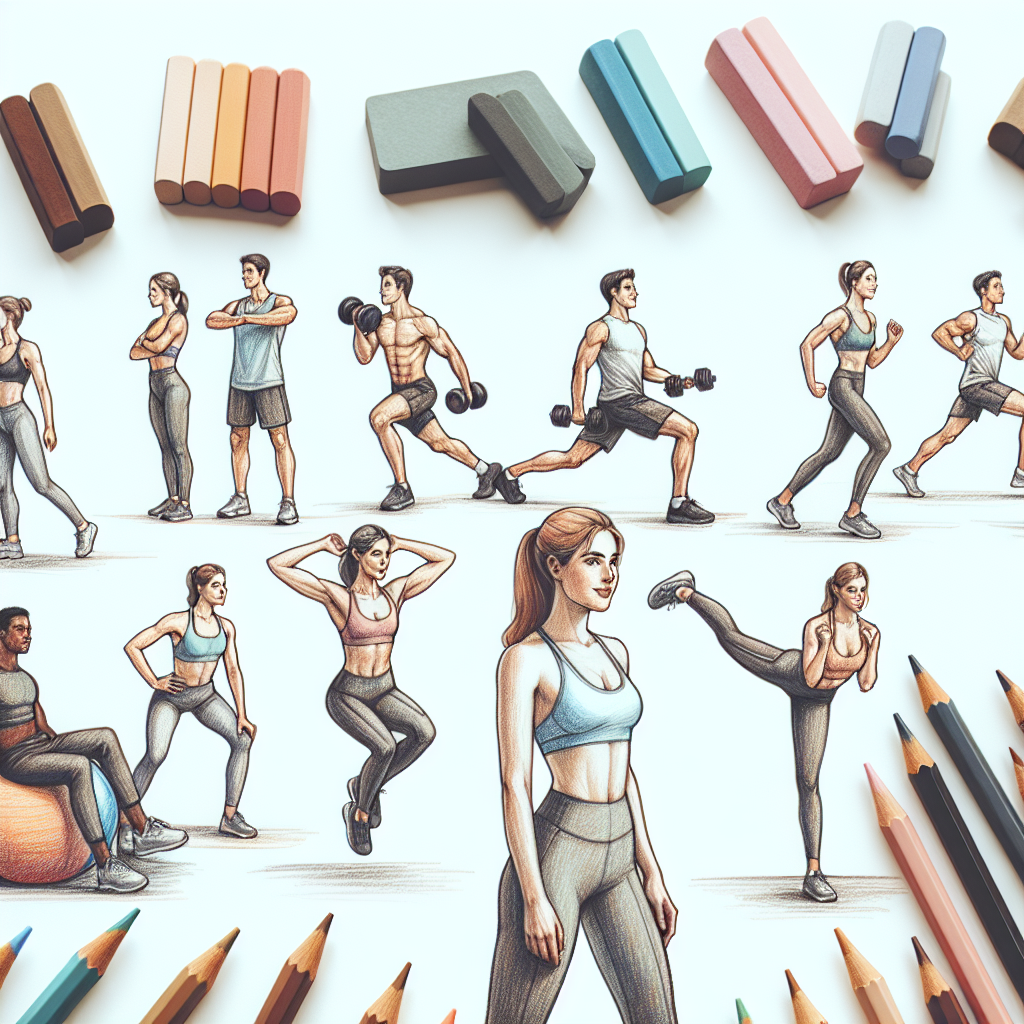
Full Body Workout Routine for Beginners at Home Without Equipment
Embarking on a fitness journey can seem daunting, especially for beginners. However, a full-body workout routine tailored for home exercises without the need for equipment is an accessible way to improve strength, flexibility, and overall health. This article provides a comprehensive guide for those starting their fitness journey, presenting easy-to-follow exercises that harness the body’s weight for effective training.
- Introduction
- Benefits of a Full Body Workout
- Essential Warm-Up Routine
- Basic Full Body Workout Routine
- Guidelines for Safe Exercise
- Consulting a Professional: When to Seek Help
- Common Misunderstandings About Home Workouts
- Frequently Asked Questions
- Conclusion
Benefits of a Full Body Workout
Engaging in a full-body workout offers numerous benefits, especially for beginners. Key advantages include:
- Efficiency: Targeting multiple muscle groups in one session saves time.
- Improved Balance and Coordination: These workouts enhance overall body control.
- Increased Strength: Bodyweight exercises bolster muscle strength without the need for heavy equipment.
- Accessibility: Workouts can be performed anywhere, requiring minimal space and no equipment.
- Mental Health Benefits: Regular exercise can improve mood and reduce anxiety.
Essential Warm-Up Routine
A proper warm-up is crucial for preparing the body for exercise and minimizing the risk of injury. Here’s a simple warm-up routine:
- Arm Circles: 30 seconds (15 seconds forward, 15 seconds backward)
- Leg Swings: 30 seconds per leg
- Torso Twists: 30 seconds
- High Knees: 30 seconds
- Jumping Jacks: 1 minute
Basic Full Body Workout Routine
The following exercises form a balanced full-body routine. Aim to perform three sets of 10-15 repetitions for each exercise, resting briefly between sets:
- Bodyweight Squats: Stand with feet shoulder-width apart, lower into a squat, and rise back up.
- Push-Ups: Keep your body straight and lower down until your chest nearly touches the ground, then push back up. Modify by doing knee push-ups if necessary.
- Lunges: Step forward with one leg, lowering your hips until both knees are bent at a 90-degree angle, then return to standing.
- Plank: Maintain a straight line from head to heels while supporting your weight on your forearms and toes.
- Glute Bridges: Lie on your back, knees bent, feet flat, lift your hips toward the ceiling and squeeze your glutes.
Guidelines for Safe Exercise
To ensure a safe and effective workout, adhere to these guidelines:
- Focus on form before increasing repetitions.
- Stay hydrated throughout your workout.
- Listen to your body and avoid pushing through pain.
- Take rest days to allow muscles to recover.
- Use a mirror or video to check your form when possible.
Consulting a Professional: When to Seek Help
While exercising at home can be effective, certain signs may indicate a need for professional guidance:
- Persistent pain or discomfort during or after exercises.
- Difficulty maintaining proper form, leading to injury concerns.
- Medical conditions that may impact your ability to exercise safely.
- Uncertainty about how to progress in your fitness journey.
Common Misunderstandings About Home Workouts
Several misconceptions often deter beginners from pursuing home workouts:
- Myth: Bodyweight workouts are ineffective. Reality: They can build strength and endurance effectively.
- Myth: You need a lot of time. Reality: Short, focused workouts can yield significant results.
- Myth: There’s no room for progress. Reality: Progress can be made by increasing reps, improving form, or adjusting the workout structure.
- Myth: All exercises require equipment. Reality: Many effective exercises use only body weight.
Frequently Asked Questions
How often should beginners perform a full-body workout?
Beginners should aim for 2-3 times per week, with rest days in between to allow recovery.
Can I see results from a home workout routine?
Yes, with consistency and proper nutrition, beginners can achieve significant results from home workouts.
What is the duration of an effective workout for beginners?
A workout of 20-30 minutes can be effective, especially with high-intensity intervals.
Should I stretch before or after a workout?
Stretching is best performed after a workout to aid recovery but can include dynamic stretches before exercise.
Is it necessary to have rest days?
Yes, rest days are essential for muscle recovery and growth, helping to prevent injury.
Are there alternatives to gym workouts?
Absolutely, many effective resources, including guided online programs, can assist in achieving fitness goals. For instance, you can explore a free registration for a 30-day exercise program where you only exercise for 6 minutes every day but achieve results akin to gym workouts: 30-Day Free Exercise Program.
Conclusion
- Full-body workouts are efficient and accessible for beginners.
- No equipment is necessary, making home workouts convenient.
- Focus on proper form to maximize effectiveness and prevent injuries.
- Consult a professional when experiencing pain or uncertainty.
- Dispelling myths can motivate and encourage beginners to participate.
Begin your fitness journey today by following the outlined activities and when you’re ready, don’t hesitate to explore additional programs like the 30-day free exercise program mentioned above. Your path to a healthier lifestyle awaits!
Author: John Angel