Categories
Home Workouts

Beginner Full Body Workout Routine at Home Without Equipment

Full Body Workout Routine for Beginners at Home Without Equipment

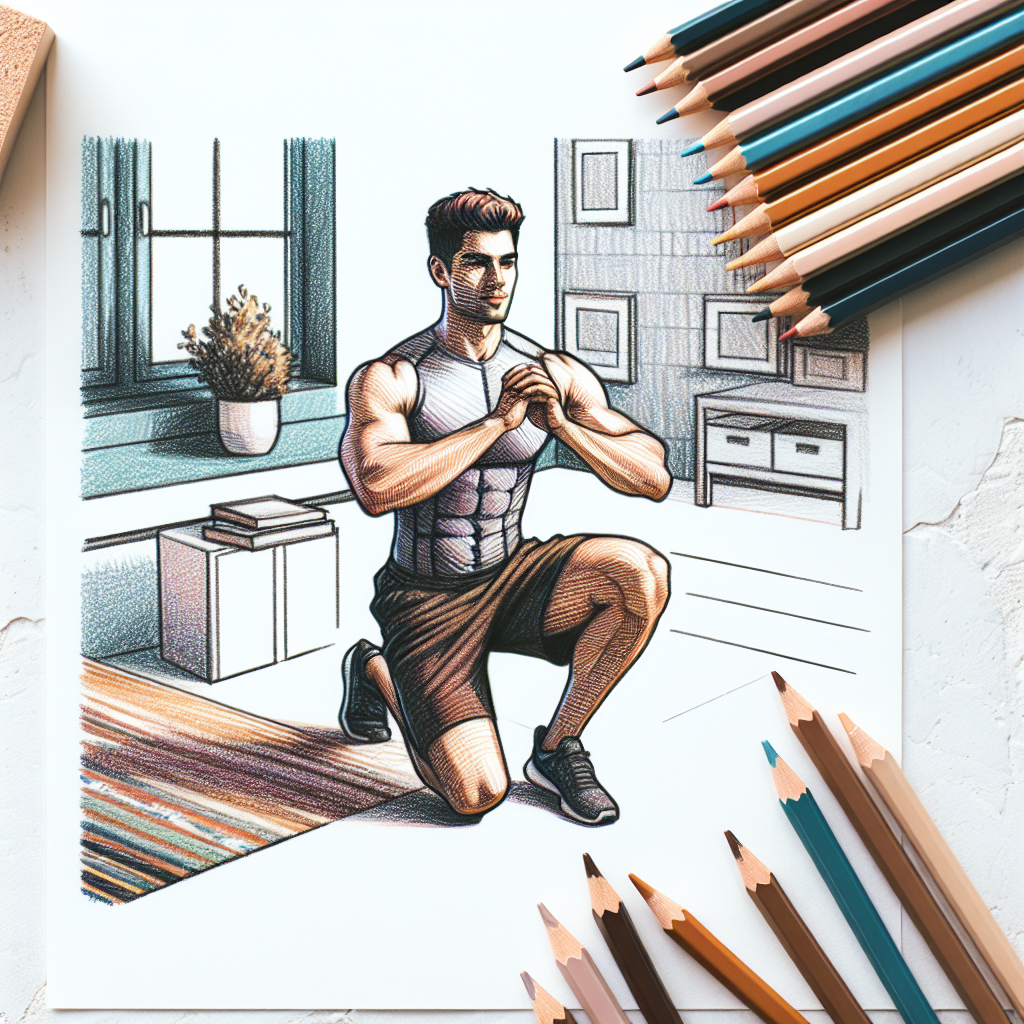
Embarking on a fitness journey can seem daunting, especially for beginners. However, a full-body workout routine tailored for home exercises without the need for equipment is an accessible way to improve strength, flexibility, and overall health. This article provides a comprehensive guide for those starting their fitness journey, presenting easy-to-follow exercises that harness the body’s weight for effective training.

  • Introduction
  • Benefits of a Full Body Workout
  • Essential Warm-Up Routine
  • Basic Full Body Workout Routine
  • Guidelines for Safe Exercise
  • Consulting a Professional: When to Seek Help
  • Common Misunderstandings About Home Workouts
  • Frequently Asked Questions
  • Conclusion

Benefits of a Full Body Workout

Engaging in a full-body workout offers numerous benefits, especially for beginners. Key advantages include:

  • Efficiency: Targeting multiple muscle groups in one session saves time.
  • Improved Balance and Coordination: These workouts enhance overall body control.
  • Increased Strength: Bodyweight exercises bolster muscle strength without the need for heavy equipment.
  • Accessibility: Workouts can be performed anywhere, requiring minimal space and no equipment.
  • Mental Health Benefits: Regular exercise can improve mood and reduce anxiety.

Essential Warm-Up Routine

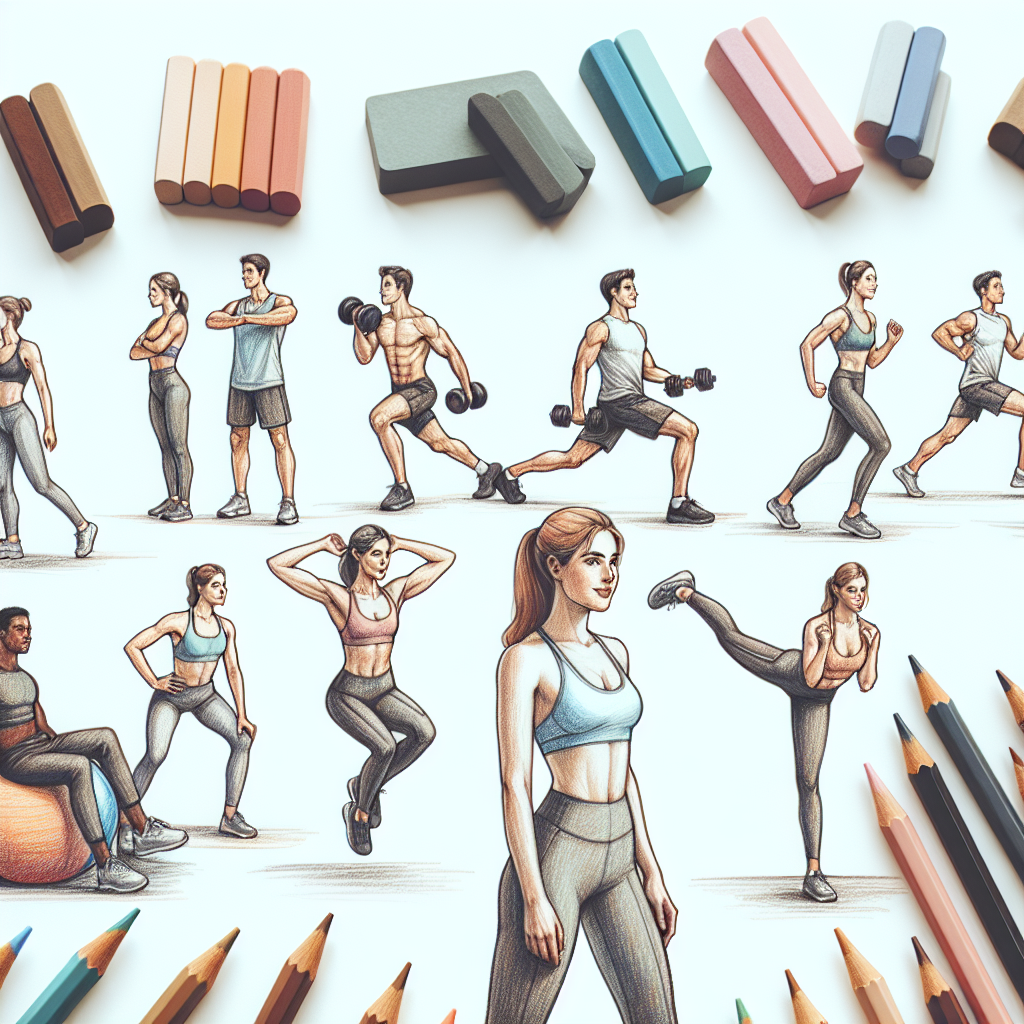
A proper warm-up is crucial for preparing the body for exercise and minimizing the risk of injury. Here’s a simple warm-up routine:

  1. Arm Circles: 30 seconds (15 seconds forward, 15 seconds backward)
  2. Leg Swings: 30 seconds per leg
  3. Torso Twists: 30 seconds
  4. High Knees: 30 seconds
  5. Jumping Jacks: 1 minute

Basic Full Body Workout Routine

The following exercises form a balanced full-body routine. Aim to perform three sets of 10-15 repetitions for each exercise, resting briefly between sets:

  1. Bodyweight Squats: Stand with feet shoulder-width apart, lower into a squat, and rise back up.
  2. Push-Ups: Keep your body straight and lower down until your chest nearly touches the ground, then push back up. Modify by doing knee push-ups if necessary.
  3. Lunges: Step forward with one leg, lowering your hips until both knees are bent at a 90-degree angle, then return to standing.
  4. Plank: Maintain a straight line from head to heels while supporting your weight on your forearms and toes.
  5. Glute Bridges: Lie on your back, knees bent, feet flat, lift your hips toward the ceiling and squeeze your glutes.

Guidelines for Safe Exercise

To ensure a safe and effective workout, adhere to these guidelines:

  • Focus on form before increasing repetitions.
  • Stay hydrated throughout your workout.
  • Listen to your body and avoid pushing through pain.
  • Take rest days to allow muscles to recover.
  • Use a mirror or video to check your form when possible.

Consulting a Professional: When to Seek Help

While exercising at home can be effective, certain signs may indicate a need for professional guidance:

  • Persistent pain or discomfort during or after exercises.
  • Difficulty maintaining proper form, leading to injury concerns.
  • Medical conditions that may impact your ability to exercise safely.
  • Uncertainty about how to progress in your fitness journey.

Common Misunderstandings About Home Workouts

Several misconceptions often deter beginners from pursuing home workouts:

  • Myth: Bodyweight workouts are ineffective. Reality: They can build strength and endurance effectively.
  • Myth: You need a lot of time. Reality: Short, focused workouts can yield significant results.
  • Myth: There’s no room for progress. Reality: Progress can be made by increasing reps, improving form, or adjusting the workout structure.
  • Myth: All exercises require equipment. Reality: Many effective exercises use only body weight.

Frequently Asked Questions

How often should beginners perform a full-body workout?

Beginners should aim for 2-3 times per week, with rest days in between to allow recovery.

Can I see results from a home workout routine?

Yes, with consistency and proper nutrition, beginners can achieve significant results from home workouts.

What is the duration of an effective workout for beginners?

A workout of 20-30 minutes can be effective, especially with high-intensity intervals.

Should I stretch before or after a workout?

Stretching is best performed after a workout to aid recovery but can include dynamic stretches before exercise.

Is it necessary to have rest days?

Yes, rest days are essential for muscle recovery and growth, helping to prevent injury.

Are there alternatives to gym workouts?

Absolutely, many effective resources, including guided online programs, can assist in achieving fitness goals. For instance, you can explore a free registration for a 30-day exercise program where you only exercise for 6 minutes every day but achieve results akin to gym workouts: 30-Day Free Exercise Program.

Conclusion

  • Full-body workouts are efficient and accessible for beginners.
  • No equipment is necessary, making home workouts convenient.
  • Focus on proper form to maximize effectiveness and prevent injuries.
  • Consult a professional when experiencing pain or uncertainty.
  • Dispelling myths can motivate and encourage beginners to participate.

Begin your fitness journey today by following the outlined activities and when you’re ready, don’t hesitate to explore additional programs like the 30-day free exercise program mentioned above. Your path to a healthier lifestyle awaits!

Author: John Angel

Related articles

Categories
Fitness

Home Full Body Workout: Effective No-Weights Routine

Full Body Workout at Home: No Weights Needed

In an era where fitness is often associated with elaborate gym memberships and expensive equipment, the potential for effective workouts at home without weights is frequently overlooked. This article provides a comprehensive guide to executing a full-body workout at home using just your body weight. The central benefit of this approach is accessibility; you can engage in effective exercises without the clutter and expense of gym equipment, all while achieving substantial results. Additionally, for those seeking a structured approach, I recommend exploring a free 30-day exercise program where you only exercise for 6 minutes daily to enjoy gym-like results. Learn more and register here.

  • Benefits of Bodyweight Workouts
  • Essential Warm-Up Techniques
  • Comprehensive Full Body Workout Routine
  • Myths and Misconceptions
  • When to Consult a Professional
  • Frequently Asked Questions
  • Conclusion and Call to Action

Benefits of Bodyweight Workouts

Bodyweight workouts offer numerous advantages, making them an ideal choice for home fitness routines. First, they enhance functional strength by engaging multiple muscle groups simultaneously. This type of training improves balance, coordination, and agility, enhancing your performance in everyday activities.

Secondly, bodyweight exercises adapt easily to different fitness levels. Whether you are a beginner or an experienced athlete, there is always a way to increase or decrease the intensity of your routine. Lastly, they require minimal space and can often be performed in a matter of minutes, making them time-efficient and convenient.

Essential Warm-Up Techniques

Prior to engaging in any workout regimen, a proper warm-up is crucial. Effective warm-ups increase blood flow to the muscles and reduce the risk of injury.

  • Dynamic Stretching: Engage in movements like arm circles, leg swings, and torso twists for about 5 minutes.
  • Light Cardio: Perform activities such as jogging in place, jumping jacks, or high knees for an additional 5 minutes to elevate your heart rate.
  • Joint Mobilization: Focus on gently moving each joint through its full range of motion, especially your ankles, knees, hips, shoulders, and wrists.

Comprehensive Full Body Workout Routine

Here is a sample full-body workout routine you can complete in the comfort of your own home:

  1. Push-Ups (3 sets of 10-15 reps): Targets chest, shoulders, and triceps.
  2. Squats (3 sets of 15-20 reps): Focuses on the quadriceps, hamstrings, and glutes.
  3. Plank (3 sets of 30-60 seconds): Engages core muscles for stability and strength.
  4. Lunges (3 sets of 10-12 reps per leg): Develops lower body strength and balance.
  5. Burpees (3 sets of 8-10 reps): A compound movement that raises your heart rate while working multiple muscle groups.
  6. Mountain Climbers (3 sets of 30 seconds): Engages your core and promotes cardiovascular fitness.
  7. Glute Bridges (3 sets of 15-20 reps): Strengthens the glutes and lower back.

Ensure that you take short rests, about 30 seconds, between sets and exercises to maintain intensity while allowing brief recovery.

Myths and Misconceptions

Several myths surrounding bodyweight training persist, leading to misconceptions about its effectiveness.

  • Myth #1: Bodyweight exercises are not effective for muscle building. Truth: While they may not provide the same resistance as weights, bodyweight exercises can lead to significant muscle tone and strength.
  • Myth #2: You need a gym or equipment to achieve results. Truth: Many successful fitness journeys begin at home with a basic understanding of bodyweight exercises.
  • Myth #3: Bodyweight workouts are too easy for experienced athletes. Truth: Advanced variations of bodyweight exercises can continue to challenge higher fitness levels.

When to Consult a Professional

While many individuals can safely engage in bodyweight workouts, there are instances where consultation with a fitness or health professional is advised:

  • If you experience persistent pain or discomfort during exercises.
  • Before starting a new exercise program if you have pre-existing health conditions.
  • If you are unsure about the correct form for exercises and fear injury.
  • If your fitness goals require specialized guidance or personalized programming.

Frequently Asked Questions

Do I need to do a warm-up before exercising?

Yes, warming up is essential as it prepares your muscles and reduces the risk of injury.

How often should I do bodyweight workouts?

Most guidelines suggest 2-4 times per week, ensuring adequate recovery time between sessions.

Can bodyweight exercises help with weight loss?

Absolutely. When coupled with a balanced diet, bodyweight exercises can contribute significantly to weight loss.

Is it possible to gain muscle using only bodyweight exercises?

Yes. Bodyweight exercises promote muscle growth and development, especially when performed correctly and with progressive overload.

What if I can’t perform some exercises due to limitations?

There are modified versions of most exercises that can accommodate varying fitness levels. Consult tutorials or professionals for alternatives.

Are there specific bodyweight exercises for beginners?

Beginner-friendly exercises include wall push-ups, assisted squats, and modified planks, focusing on proper form before progressing.

Conclusion

  • Bodyweight workouts offer numerous advantages, including accessibility and versatility.
  • A proper warm-up is vital for injury prevention
  • A well-structured bodyweight routine can effectively target all major muscle groups.
  • Common myths should not deter you from pursuing bodyweight exercises to achieve your fitness goals.
  • Seek professional advice when needed, particularly for injury concerns or tailored programming.

Embarking on your fitness journey at home can be both rewarding and effective. Consider incorporating bodyweight exercises into your routine and explore the offered 30-day program to maximize your potential through just 6 minutes of focused daily exercise.

Author: John Angel

Related articles

Categories
Fitness

Beginner Calisthenics Workout: No Equipment Needed

Beginner Calisthenics Workout Without Equipment

Embarking on a fitness journey can often seem daunting, especially for beginners. However, calisthenics offers a practical and accessible solution. By utilizing your own body weight, you can achieve significant strength and flexibility gains without the need for specialized equipment. This article outlines a beginner-friendly calisthenics workout that can be performed anywhere, emphasizing the essential exercises and tips to maximize effectiveness. Additionally, you can explore a simple 30-day exercise program that requires only 6 minutes a day but promises gym-equivalent results. Sign up here.

  • Understanding Calisthenics
  • Benefits of Bodyweight Training
  • Essential Warm-Up
  • Beginner Calisthenics Routine
  • When to Seek Professional Guidance
  • Myths and Common Mistakes
  • Frequently Asked Questions
  • Conclusion

Understanding Calisthenics

Calisthenics encompasses a range of exercises that utilize body weight for resistance. It is rooted in military training and physical education, making it a powerful means to develop strength, flexibility, and endurance. The beauty of calisthenics lies in its versatility; it can be adapted to suit various fitness levels and can be performed virtually anywhere, from your living room to a park.

Benefits of Bodyweight Training

Engaging in bodyweight exercises presents numerous advantages:

  • No Equipment Needed: Frees you from gym memberships and equipment purchases.
  • Improved Functional Strength: Builds strength relevant to daily activities.
  • Enhanced Flexibility and Mobility: Promotes better movement patterns.
  • Accessible for All Levels: Easily modified to suit beginners or advanced athletes.
  • Variety and Engagement: Keeps workouts fresh and interesting.

Essential Warm-Up

Before embarking on any fitness routine, a proper warm-up is crucial to prevent injury and prepare your body for exercise. Here are some simple warm-up exercises:

  1. Jumping Jacks: 2 minutes to elevate your heart rate.
  2. Arm Circles: 30 seconds in each direction to loosen the shoulders.
  3. Leg Swings: 30 seconds per leg to mobilize the hip joints.
  4. Torso Twists: 1 minute to prepare the core.

Beginner Calisthenics Routine

This beginner routine combines strength and endurance exercises that can be performed at home. Aim for two to three sessions per week, allowing at least a day of rest between workouts.

  1. Push-Ups: 3 sets of 5-10 reps. Adjust the difficulty by performing them on your knees if necessary.
  2. Bodyweight Squats: 3 sets of 15 reps. Ensure your knees do not extend past your toes.
  3. Plank: 3 sets, holding for 20-30 seconds. Focus on maintaining a straight line from head to heels.
  4. Bench Dips: 3 sets of 8-10 reps. Use a sturdy chair or low table.
  5. Mountain Climbers: 3 sets of 15 reps per leg to elevate heart rate.

As you become more comfortable with these exercises, gradually increase the repetitions or the duration of each hold to continue challenging your body.

When to Seek Professional Guidance

While calisthenics is generally safe for beginners, there are scenarios where consulting with a fitness professional may be beneficial:

  • If you experience sharp or persistent pain during exercises.
  • If you are recovering from an injury or surgery.
  • If you have pre-existing health conditions that affect your ability to exercise.
  • If you feel unsure about your form or technique.
  • If you want personalized guidance to meet specific fitness goals.

Myths and Common Mistakes

It is important to differentiate fact from fiction when it comes to calisthenics. Here are some common myths:

  • Myth: Calisthenics is only for beginners.
  • Reality: Calisthenics can be advanced and offers diverse challenges for experienced athletes.
  • Myth: You won’t build muscle without weights.
  • Reality: Progressive calisthenics can effectively build strength and muscle.
  • Myth: All bodyweight exercises are easy.
  • Reality: Many bodyweight exercises can be highly challenging when performed correctly.

Frequently Asked Questions

What is calisthenics?

Calisthenics refers to exercises performed using your body weight to develop strength, flexibility, and endurance.

Can I do calisthenics at home?

Yes, calisthenics can be performed anywhere, making it ideal for home workouts.

How often should I do calisthenics?

Aim for two to three sessions per week as a beginner, allowing rest days for recovery.

Aren’t bodyweight exercises too easy?

While some bodyweight exercises are simple, they can be adjusted in intensity and complexity to challenge all fitness levels.

Do I need a warm-up before calisthenics?

Yes, warming up is essential to minimize the risk of injury and prepare your muscles for exercise.

Can I lose weight with calisthenics?

Yes, combined with a balanced diet, calisthenics can contribute to weight loss and improved fitness levels.

Conclusion

  • Calisthenics is an accessible and effective workout for all skill levels.
  • A consistent routine can lead to improved strength, flexibility, and mobility.
  • Warm-up exercises are vital to prevent injury.
  • Seek professional advice if you have health concerns or uncertainty regarding your workout.
  • Stay informed about myths to maximize your calisthenics experience.

Are you ready to take the first step in your fitness journey? Consider incorporating calisthenics into your routine and explore the option of a 30-day program requiring only 6 minutes a day to see results like a gym goer. Sign up here.

Author: John Angel

Related articles

Categories
Home Workouts

Effective Home Strength Workouts Without Equipment

In the quest for fitness, the notion that home workouts require extensive equipment is a common misconception. In reality, you can achieve remarkable strength and conditioning results with just your body weight. This article presents a comprehensive home strength workout that requires no equipment, allowing you to build muscle, increase endurance, and maintain overall health without stepping into a gym.

  • Introduction
  • Understanding Body Weight Training
  • Essential Warm-Up Exercises
  • Strength Workouts You Can Do at Home
  • Practical Steps for Effective Workouts
  • When to Consult a Professional
  • Common Myths and Misconceptions
  • FAQ
  • Conclusion

Understanding Body Weight Training

Body weight training refers to exercises that use the individual’s weight as resistance. This form of exercise is highly efficacious for developing strength and flexibility and is suitable for individuals of all fitness levels. The advantages of body weight workouts include convenience, minimal risk of injury, and the ability to perform them at any time and location.

Essential Warm-Up Exercises

Prioritizing a proper warm-up is critical before embarking on any workout. It prepares your muscles and joints, reducing the risk of injury while enhancing performance. Here are a few effective warm-up exercises:

  • Jumping Jacks: A great full-body move to elevate your heart rate.
  • Arm Circles: Loosens shoulders and promotes mobility.
  • Dynamic Leg Swings: Improves lower body flexibility.
  • Torso Twists: Activates core muscles and enhances spinal mobility.

Strength Workouts You Can Do at Home

1. Push-Ups

Push-ups are exceptional for developing the chest, shoulders, and triceps. Begin in a plank position and lower your body until your chest nearly touches the floor. Maintain a straight line from head to heels.

2. Squats

Squats target the legs and glutes. Stand with feet shoulder-width apart, lower your body as if sitting in a chair, then return to the starting position.

3. Planks

Planks are excellent for core strength. Lie face down, then elevate your body by resting on your forearms and toes. Hold the position while maintaining a straight body line.

4. Lunges

Lunges work on your leg muscles. Step forward with one leg, lowering your hips until both knees are bent at approximately a 90-degree angle.

5. Burpees

Burpees combine strength and cardio. Start from a standing position, drop into a squat, kick your feet back to a plank, perform a push-up, return to squat, and jump up.

Practical Steps for Effective Workouts

To achieve the maximum benefit from your home workouts, follow these steps:

  1. Choose 4-5 strength exercises.
  2. Perform 3 sets of each exercise, aiming for 8-15 repetitions per set.
  3. Rest for 30-60 seconds between sets.
  4. Incorporate these routines 4-5 times weekly for optimal results.
  5. To enhance your routine, consider a structured program like a 30-day exercise program that requires just 6 minutes a day.

When to Consult a Professional

While body weight exercises are generally safe, there are circumstances that necessitate professional consultation. Consider seeking guidance if you experience persistent pain, have pre-existing medical conditions, or are unsure about proper techniques. A qualified fitness professional can provide tailored advice and ensure you perform exercises safely and effectively.

Common Myths and Misconceptions

There are several myths surrounding home workouts that often deter individuals from engaging in effective body weight exercises:

  • Myth 1: You need weights to gain muscle mass. Body weight exercises can effectively increase strength and volume.
  • Myth 2: Home workouts are less effective than gym workouts. Consistency and proper techniques are key to achieving results, regardless of location.
  • Myth 3: Body weight exercises are only for beginners. They can be adapted to suit all fitness levels.

FAQ

1. Can I get fit doing only body weight exercises?

Yes, body weight exercises are effective for building strength, endurance, and flexibility.

2. How often should I perform home strength workouts?

Aim for 4-5 times a week to maximize results.

3. Is it necessary to warm up before exercising?

Yes, warming up prepares your body and prevents injuries.

4. Do I need to join a gym to get results?

No, home workouts using body weight can be just as effective.

5. How can I progress with body weight exercises?

Increase repetitions, sets, or modify exercises to more challenging variations.

6. Is any equipment required for these workouts?

No, all exercises outlined can be performed without equipment.

Conclusion

  • Home strength workouts require no equipment and can be highly effective.
  • Essential warm-up exercises are crucial for injury prevention.
  • Incorporating body weight exercises can enhance strength and endurance.
  • Consulting a professional is advised if experiencing pain or uncertainty.
  • Understanding common myths can empower you to take advantage of effective training methods.

Embrace the convenience of body weight training and start your journey toward improved fitness today. For an efficient routine that fits into your busy life, consider registering for a free 30-day exercise program where you only need to dedicate just 6 minutes daily to see results.

Author: John Angel

Related articles

Website analytics information

We use Google Analytics 4 for visitor statistics. Analytics cookies require your consent, which you can change using the button above. The data controller is ZDRAVÍ S ÚSMĚVEM s.r.o., company ID 29283329, contact podpora@revolucnicviceni.cz. Google processes browser, device and page visit information. We do not send form field values to Analytics. How Google uses information · Google Privacy Policy.